Sheikh Khalifa bin Hamad Al Thani: The Resolute Architect of Modern Qatar
A powerful ruler whose firm leadership shaped the foundations of a sovereign state

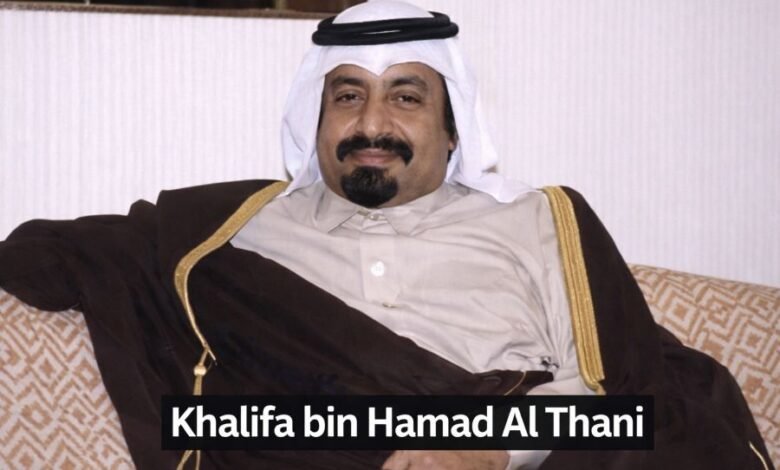
Table of Contents
ToggleIntroduction
Sheikh Khalifa bin Hamad Al Thani stands as one of the most decisive and influential leaders in the history of Qatar. His rule marked a turning point when the young nation moved from limited state structures toward centralized governance and long-term national planning. Known for his firm authority and pragmatic decision-making, he played a crucial role in stabilizing the country during a sensitive post-independence era.
While his leadership style drew both respect and criticism, there is no doubt that Sheikh Khalifa bin Hamad Al Thani left a deep and lasting imprint on Qatar’s political and economic framework. His era laid the groundwork for the transformations that would later place Qatar among the most prominent states in the Gulf region.
Quick Bio
| Field | Details |
|---|---|
| Full Name | Sheikh Khalifa bin Hamad bin Abdullah Al Thani |
| Known As | Sheikh Khalifa bin Hamad Al Thani |
| Date of Birth | 17 September 1932 |
| Place of Birth | Al Rayyan, Qatar |
| Nationality | Qatari |
| Ethnicity | Arab |
| Religion | Sunni Islam |
| Profession | Statesman, Emir of Qatar |
| Reign | Emir of Qatar (1972–1995) |
| Date of Death | 23 October 2016 |
| Age at Death | 84 years |
Early Life and Background
Sheikh Khalifa bin Hamad Al Thani was born into the ruling House of Thani, a family that had governed Qatar for generations. Growing up in Al Rayyan, he was immersed in a culture of leadership, responsibility, and tribal governance from an early age. His upbringing emphasized loyalty to the state, discipline, and an understanding of regional politics.
As a member of the ruling family, he was prepared for public responsibility rather than private life. This early exposure to governance shaped his character and instilled in him a strong sense of authority, which later defined his leadership style. His formative years coincided with Qatar’s gradual emergence from a traditional society into a modern state.
Education and Formation
Sheikh Khalifa bin Hamad Al Thani received traditional education appropriate for future leadership within the ruling family. This included instruction in Islamic studies, governance, and state affairs. Rather than pursuing a publicly documented academic path abroad, his education was rooted in practical governance and direct involvement in public administration.
This hands-on approach allowed him to gain firsthand experience in managing state institutions. His early exposure to governmental responsibilities proved instrumental in shaping his administrative skills and political judgment.
Start of Career and Early Roles
His public career began at a remarkably young age, reflecting the trust placed in him by the ruling establishment. In 1949, he was appointed Chairman of Security Affairs, marking his formal entry into state administration. This role gave him insight into internal security and governance.
Later, in 1957, he became Minister of Education, where he contributed to the early development of Qatar’s educational framework. Over time, he held senior positions including Prime Minister, Minister of Finance, and Deputy Ruler, steadily consolidating his influence within the state.
Rise to Power
In February 1972, Sheikh Khalifa bin Hamad Al Thani assumed power as Emir of Qatar following a bloodless change of leadership. This moment marked a decisive shift in Qatar’s governance, as authority became more centralized under his leadership.
His accession came during a period of regional uncertainty, requiring firm control and clear direction. He quickly moved to strengthen state institutions and assert Qatar’s sovereignty, signaling a new phase in the country’s political evolution.
Sheikh Khalifa bin Hamad Al Thani as Emir of Qatar
Governance and State Building
During his 23-year reign, Sheikh Khalifa bin Hamad Al Thani focused on building a strong central government. He reorganized ministries, clarified administrative roles, and reinforced the authority of the state. These reforms helped transform Qatar from a loosely administered territory into a functioning modern state.
His leadership style was authoritative, which some viewed as rigid, yet it brought stability during a critical developmental stage. By consolidating power, he ensured that state decisions could be implemented effectively without prolonged internal disputes.
Economic Direction and Energy Development
A defining feature of his rule was the strategic development of Qatar’s oil and natural gas sector. Sheikh Khalifa recognized the importance of energy resources as the backbone of national prosperity. Under his leadership, Qatar entered key agreements that expanded production and increased state revenue.
These decisions did not yield immediate global prominence, but they laid the essential foundations for Qatar’s future economic strength. His policies ensured that natural resources were placed firmly under state control, securing long-term benefits for the nation.
Positive and Negative Aspects of His Rule
On the positive side, Sheikh Khalifa bin Hamad Al Thani provided stability, strengthened sovereignty, and established effective governance structures. His firm leadership helped Qatar navigate a challenging regional environment and build state capacity from the ground up.
However, his centralized style also drew criticism for limiting political participation and concentrating authority. This dual legacy reflects a ruler who prioritized order and state strength, sometimes at the expense of broader inclusiveness.
End of Reign and Later Years
In June 1995, Sheikh Khalifa bin Hamad Al Thani’s reign came to an end following a bloodless palace coup while he was abroad. This transition marked a generational shift in leadership and the beginning of a new phase in Qatar’s development.
After spending several years outside the country, he eventually returned to Qatar. He lived his later years away from public political life, maintaining a low profile until his passing in 2016.
Death and National Response
Sheikh Khalifa bin Hamad Al Thani passed away on 23 October 2016 at the age of 84. His death marked the end of an era in Qatari history. The state observed national mourning, reflecting his long service and historical importance.
He was laid to rest in Al Rayyan, the area of his birth, symbolically closing the chapter of a life deeply connected to the nation’s evolution.
Legacy and Historical Significance
The legacy of Sheikh Khalifa bin Hamad bin Abdullah Al Thani is inseparable from the foundations of modern Qatar. He is remembered as a ruler who prioritized state authority, institutional development, and economic foresight. His policies enabled later leaders to build upon a stable and organized state framework.
While opinions on his leadership style remain divided, his role in shaping Qatar’s early modern identity is undeniable. The administrative systems and energy strategies established during his reign continue to influence the country’s trajectory today.
Conclusion
Sheikh Khalifa bin Hamad Al Thani was a leader of strength, resolve, and long-term vision. His rule combined decisive action with structural reform, creating a foundation that transformed Qatar from a modest Gulf state into a nation prepared for global relevance. Both admired and critiqued, his impact endures as a central chapter in Qatar’s modern history.
Frequently Asked Questions
Who was Sheikh Khalifa bin Hamad Al Thani?
Sheikh Khalifa bin Hamad Al Thani was the Emir of Qatar from 1972 to 1995 and a key architect of the country’s modern state institutions.
When was Sheikh Khalifa bin Hamad Al Thani born?
He was born on 17 September 1932 in Al Rayyan, Qatar.
What is Sheikh Khalifa bin Hamad Al Thani known for?
He is known for centralizing governance, strengthening state institutions, and laying the groundwork for Qatar’s energy-based economy.
How long did Sheikh Khalifa bin Hamad Al Thani rule Qatar?
He ruled Qatar for 23 years, from 1972 until 1995.
What is his historical legacy?
His legacy lies in building a stable state structure and setting the foundation for Qatar’s later economic and political rise.