Sophia Gaston: The Powerful Mind Shaping British Foreign Policy
From public-opinion research to AUKUS, international security and Britain’s changing global role

Introduction
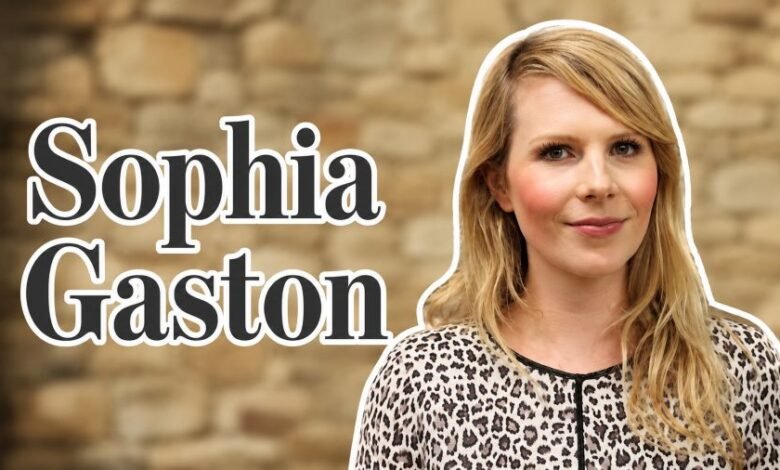
Sophia Gaston is a British foreign-policy researcher, geopolitical analyst and policy adviser based in London. Her work explains how the United Kingdom can protect its interests, strengthen its international alliances and respond to security challenges involving China, Russia and a changing global order.
She has worked across universities, think tanks, government advisory projects and international policy organisations. Her main areas of expertise include British foreign policy, NATO, the transatlantic alliance, European security, the Indo-Pacific, democratic resilience and AUKUS.
Sophia Gaston Quick Profile
| Detail | Verified information |
|---|---|
| Full name | Sophia Gaston |
| Nationality | British |
| Professional base | London, United Kingdom |
| Profession | Foreign-policy researcher, geopolitical analyst and policy adviser |
| Main expertise | UK foreign policy, Euro-Atlantic security, Indo-Pacific security, China, Russia and AUKUS |
| Current King’s role | Senior Research Fellow at the Centre for Statecraft and National Security |
| Asia Group role | Senior Advisor in London |
| GMF role | Senior Visiting Fellow in Strategic Foresight |
| Known for | Foreign-policy research, government advice and founding the British AUKUS Industry Forum |
Her verified public profiles focus mainly on her professional career. Personal details that have not been confirmed by reliable sources have not been added.
Who Is Sophia Gaston?
Sophia Gaston is a recognised voice in discussions about Britain’s place in the world. She studies the political, economic and security pressures affecting the United Kingdom and other democratic countries.
Her research does not examine foreign policy only from the viewpoint of governments. It also considers public opinion, political culture and whether voters support international policies.
This approach is important because governments need public trust when making long-term decisions about defence spending, international alliances, military support and economic security.
Her work connects academic research with practical advice for governments, companies and public institutions. The German Marshall Fund’s official profile describes her as a specialist in the Euro-Atlantic and Indo-Pacific security theatres.
Sophia Gaston’s Nationality and Background
Sophia Gaston is British and professionally based in London.
Her career developed through social research, public-policy analysis and international affairs. She became particularly interested in how political change, economic insecurity, nationalism, populism and public distrust can affect democratic countries.
This early focus helped her understand that foreign policy is closely connected with domestic politics. A government may have an ambitious international strategy, but that strategy can become difficult to maintain when voters do not understand or support it.
Her interest in public attitudes connects with the wider field of political analysis. Data-led specialists such as Dave Wasserman also demonstrate how public behaviour and political evidence can help explain major national decisions.
Early Research and Think-Tank Career
Gaston held several important research and leadership positions before moving into her current academic and advisory roles.
She previously served as Deputy Director and Head of International Research at Demos. Her work there covered political polarisation, populism, nationalism and social change across different countries.
She later worked at the Henry Jackson Society and was connected with research at the London School of Economics. Her projects examined subjects such as democratic trust, conspiracy theories, political communication and public attitudes.
These roles allowed her to study how fear, identity and social division can influence political decisions.
Her experience can be compared with the policy-focused work of figures such as Ben Broadbent, whose career also connects detailed research with important national decision-making.
Director of the British Foreign Policy Group
In August 2019, Gaston was appointed Director of the British Foreign Policy Group.
During her leadership, the organisation expanded its research into British public opinion and the country’s international relationships. Its work examined how people in the UK viewed the United States, Europe, China, Russia, foreign aid, international trade and national security.
She also contributed to discussions about “Global Britain,” a term used to describe the United Kingdom’s international ambitions following its departure from the European Union.
Her approach argued that foreign policy should not be designed only by officials and experts. It should also consider the views, concerns and priorities of ordinary citizens.
Political research becomes more useful when it can be explained clearly to the public. This is also visible in the career of Madeline Grant, who moved through policy research and speechwriting before becoming a prominent Westminster commentator.
Work at Policy Exchange and ASPI
After leaving the British Foreign Policy Group, Gaston became Head of Foreign Policy at Policy Exchange.
Her work examined Britain’s strategic relationships, European security, national resilience and the challenges presented by authoritarian states. She also researched how economic policy, technology, industry and national security were becoming more closely connected.
She later joined the Australian Strategic Policy Institute as a senior fellow and UK foreign-policy lead.
This position strengthened the Indo-Pacific side of her work. It also gave her a larger role in discussions about security cooperation between Britain, Australia and the United States.
Current Roles in 2026
As of July 2026, Gaston holds several senior research and advisory positions.
She is a Senior Research Fellow at the Centre for Statecraft and National Security in the Department of War Studies at King’s College London.
She is also a Senior Advisor in London to The Asia Group’s defence and national-security practice. Her work there involves geopolitical risk, international strategy, market conditions and the security challenges affecting companies and governments.
The Asia Group’s official profile describes her as a specialist in democratic resilience, strategic competition and security across the Euro-Atlantic and Indo-Pacific regions.
In May 2026, the German Marshall Fund announced that she had joined the organisation as a London-based nonresident senior fellow. Its current expert page identifies her as a Senior Visiting Fellow in Strategic Foresight.
She also holds professional affiliations with:
- The Changing Character of War Centre at the University of Oxford
- The National Security College at the Australian National University
- The European Policy Centre in Brussels
These positions give her access to policy discussions across the United Kingdom, Europe, Australia and the United States.
What Is Sophia Gaston Known For?
She is mainly known for her research into the position of Britain within a rapidly changing international system.
Her work explores several important questions:
- How should Britain manage its relationship with the United States?
- What role should the UK play in NATO and European defence?
- How should democratic countries respond to China and Russia?
- Can Britain remain active in both Europe and the Indo-Pacific?
- How can governments build public support for foreign policy?
- How should national security influence technology and economic policy?
She argues that Britain’s relationships with Europe, the United States, Australia and other democratic partners should support one another rather than compete for attention.
Her work also highlights the importance of explaining complicated policies to ordinary people. Public communication plays a similar role in science, where specialists such as Hannah Critchlow make difficult research understandable to wider audiences.
British AUKUS Industry Forum
One of Gaston’s most important professional projects is the British AUKUS Industry Forum, which she founded and leads.
AUKUS is a security partnership involving Australia, the United Kingdom and the United States.
Its first pillar focuses on helping Australia obtain nuclear-powered submarines. Its second pillar covers advanced technologies such as:
- Artificial intelligence
- Cybersecurity
- Quantum technologies
- Undersea capabilities
- Electronic warfare
- Hypersonic technology
- Defence innovation
The British AUKUS Industry Forum connects policymakers, researchers, defence companies, investors and technology specialists.
Gaston has argued that British universities and technology companies could make an important contribution to AUKUS. However, this requires stronger coordination, suitable investment and systems that allow trusted organisations to share sensitive information safely.
Government Advisory Work
Gaston advises the British Government as an external policy expert and challenge partner.
This means she can review ideas, test assumptions and provide an independent view of geopolitical risks.
Her public profiles also state that she helps train British civil servants in geopolitical analysis and China-related capabilities.
This work places her between academic research and practical government decision-making. She does not serve as an elected politician. Instead, she contributes specialist knowledge that can help officials understand international threats and opportunities.
Research on Britain’s Alliances
A major theme in her work is the importance of alliances.
She studies Britain’s relationships with:
- The United States
- France
- Germany
- The European Union
- NATO
- Australia
- Japan
- Nordic and Baltic countries
Her research suggests that Britain should remain closely involved in European security while also building stronger partnerships in the Indo-Pacific.
She has also written about the need for continued support for Ukraine and stronger European defence capabilities.
International policy can be difficult for the public to follow without clear reporting. British political journalists such as Beth Rigby play a different but connected role by questioning leaders and explaining political decisions to national audiences.
China, Russia and Economic Security
Gaston treats China and Russia as different strategic challenges rather than presenting them as identical threats.
Russia is closely connected with military aggression, European security and the war against Ukraine.
China presents a broader mix of economic, technological, diplomatic and security questions. Britain and China remain commercially connected, but the UK must also protect critical industries, research, infrastructure and sensitive technology.
Her work supports greater resilience in areas such as:
- Energy
- Technology
- Defence production
- Critical minerals
- Telecommunications
- Research security
- Important supply chains
This does not necessarily mean ending every economic relationship. It means reducing dangerous dependencies and protecting sectors that are important to national security.
Publications and Public Commentary
Gaston has written research reports, policy papers and public commentary about international security and Britain’s strategic future.
Her recent work includes research into:
- Britain’s role in the transatlantic alliance
- AUKUS Pillar II
- UK–US defence and technology cooperation
- Britain’s international influence
- UK–China relations
- Public support for foreign policy
- Political fragmentation in Britain
In May 2026, the German Marshall Fund published her analysis of Britain’s political fragmentation after a turbulent decade.
She also appears in television, radio, podcasts and international policy events. Her media discussions have covered NATO, China, Russia, Ukraine, AUKUS, European security and Britain’s relationship with the United States.
Why Her Work Matters
Foreign policy affects more than diplomats and military leaders.
It can influence:
- Energy prices
- Business investment
- Technology
- Employment
- National security
- International trade
- Public spending
- Britain’s relationships with other countries
Gaston’s work is important because it connects these subjects.
She examines military security alongside economic policy, technology and public opinion. This wider approach helps readers understand that international power is not based only on weapons or the size of an economy.
A country’s influence can also depend on trusted alliances, scientific research, strong institutions, public confidence and the ability to explain its goals clearly.
Frequently Asked Questions
Who is Sophia Gaston?
Sophia Gaston is a British foreign-policy researcher, geopolitical analyst and policy adviser based in London.
What is Sophia Gaston’s nationality?
She is British.
What is Sophia Gaston known for?
She is known for research into British foreign policy, international security, NATO, China, Russia, the Indo-Pacific and AUKUS.
Where does Sophia Gaston work?
She holds senior roles and affiliations connected with King’s College London, The Asia Group, the German Marshall Fund, Oxford, the Australian National University and the European Policy Centre.
What is her role at King’s College London?
She is a Senior Research Fellow at the Centre for Statecraft and National Security in the Department of War Studies.
What is the British AUKUS Industry Forum?
It is a forum founded by Gaston to connect British policymakers, researchers, defence companies and technology organisations interested in the AUKUS security partnership.
Does Sophia Gaston advise the UK Government?
Yes. Current institutional profiles describe her as an external challenge partner and policy expert who advises the government on foreign policy and geopolitical risk.
Is Sophia Gaston a politician?
She is not publicly identified as an elected politician. She works as an independent researcher, adviser and geopolitical specialist.
Final Thoughts
Sophia Gaston has built a career that connects research, government advice, international security and public communication.
Her experience at major British think tanks helped her develop expertise in public opinion and foreign policy. Her later work at King’s College London, The Asia Group and the German Marshall Fund expanded her role in global security discussions.
Through her research on AUKUS, NATO, Europe, China, Russia and the transatlantic alliance, she continues to examine how Britain can remain secure, competitive and influential in a changing world.