Eoin McGonigal: A Fearless Irish Officer of the British Army Who Helped Shape the SAS
A short life of courage, discipline, and sacrifice that left a permanent mark on military history

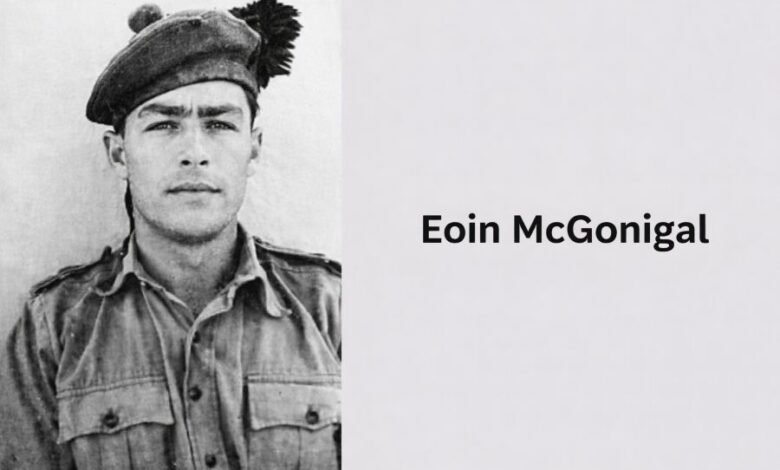
Table of Contents
ToggleIntroduction
Eoin McGonigal was an Irish officer of the British Army whose name is inseparably linked with the birth of the Special Air Service during the Second World War. Though his life was brief, his contribution to military history was powerful and enduring. He belonged to a generation that was forced to grow up quickly, shaped by global conflict and driven by duty rather than personal ambition.
His story is both inspiring and tragic. On one hand, he represents courage, discipline, and intellectual promise; on the other, his early death highlights the heavy cost paid by young officers in wartime. This article explores his life, background, education, military career, and lasting legacy.
Quick Bio
| Field | Details |
|---|---|
| Full Name | Eoin Christopher McGonigal |
| Date of Birth | 5 December 1920 |
| Place of Birth | Dublin, Ireland |
| Nationality | Irish |
| Religion | Catholic |
| Profession | Officer of the British Army |
| Military Units | Royal Ulster Rifles, No. 11 Commando, Special Air Service |
| Rank | Lieutenant |
| Years Active | 1939–1941 |
| Date of Death | 18 November 1941 |
| Age at Death | 20 years |
| Memorial | Alamein Memorial, Egypt |
Early Life and Family Background
Eoin McGonigal was born in Dublin, Ireland, into a well-educated and professionally respected family. His father, John McGonigal, was a senior lawyer, which placed education, discipline, and public service at the center of family life. This environment encouraged intellectual development and moral responsibility from an early age.
He grew up primarily in Belfast, where his upbringing combined Irish cultural identity with exposure to British institutions. This dual influence later shaped his ability to serve as an Irish officer of the British Army at a time when such choices were complex and deeply personal.
Education and Intellectual Formation
McGonigal received his early education at Clongowes Wood College, a school known for academic rigor and strong moral values. The institution emphasized leadership, discipline, and service, qualities that later defined his military career.
He went on to study Law at Trinity College Dublin, one of Ireland’s most prestigious universities. His choice of law indicated a promising civilian future, but the outbreak of the Second World War interrupted his studies and redirected his path toward military service.
Decision to Join the British Army
When war began in 1939, McGonigal made the decisive choice to leave university and enlist. This decision reflected not impulsiveness but a strong sense of duty and responsibility during a moment of global crisis.
As an Irish national serving in the British Army, his position required both personal conviction and resilience. He joined not for recognition or reward, but because he believed active service was necessary in confronting the dangers of the time.
Early Military Training and Development
McGonigal began his military career with the Royal Ulster Rifles, where he received formal training and demonstrated strong leadership qualities. His intelligence and discipline quickly distinguished him from his peers.
He was later selected for No. 11 (Scottish) Commando, an elite formation requiring exceptional physical endurance and mental strength. This phase marked his transition from conventional soldiering to specialized warfare.
Role in the Formation of the SAS
In 1941, McGonigal became one of the original officers of the Special Air Service, a newly formed unit designed for unconventional operations behind enemy lines. The SAS demanded initiative, courage, and adaptability—qualities he possessed in abundance.
As a founding member, he helped shape the early identity of the unit. Though young in age, his professionalism earned respect among fellow officers and contributed to the standards that later defined the SAS.
Service in the North African Campaign
McGonigal served in the North African theatre, where harsh terrain and unpredictable conditions tested even the most experienced soldiers. Desert warfare required resilience, self-reliance, and rapid decision-making under pressure.
During this period, he took part in early SAS operations aimed at disrupting enemy supply lines and airfields. These missions were dangerous, experimental, and often conducted with limited resources, making survival uncertain.
Death in Active Service
On 18 November 1941, Eoin McGonigal was killed during an SAS operation in Libya following a parachute deployment. He was only twenty years old at the time of his death.
His body was never recovered, and he has no known grave. Instead, his name is engraved on the Alamein Memorial in Egypt, ensuring that his sacrifice is formally remembered despite the absence of a burial site.
Character and Reputation
Those who served alongside McGonigal remembered him as intelligent, composed, and quietly determined. He was not known for recklessness but for thoughtful bravery and strong ethical standards.
His close association with other early SAS officers placed him among a group of individuals whose shared values and discipline laid the foundation for one of the world’s most respected military units.
Legacy and Historical Significance
Although his military career lasted barely two years, McGonigal’s legacy endures through the institution he helped build. The SAS went on to become a defining force in modern special operations, and his role in its earliest phase remains historically significant.
His life symbolizes both promise and loss. He represents a generation of Irish and British officers whose futures were sacrificed in the pursuit of a greater cause, leaving behind influence rather than longevity.
Conclusion
Eoin McGonigal’s story is a powerful reminder that impact is not measured by the length of a life but by the depth of commitment within it. As an Irish officer of the British Army, he navigated complex identities and historical tensions with integrity and courage.
Though he never lived to see the lasting success of the SAS, his contribution helped shape its foundation. His name remains etched in military history as a symbol of quiet strength, sacrifice, and enduring influence.
Frequently Asked Questions
Who was Eoin McGonigal?
Eoin McGonigal was an Irish officer of the British Army and one of the founding members of the Special Air Service during World War II.
Where was Eoin McGonigal born?
He was born in Dublin, Ireland, on 5 December 1920.
What was Eoin McGonigal’s profession?
He served as a commissioned officer in the British Army and later in the SAS.
How did Eoin McGonigal die?
He was killed in action during an SAS operation in Libya in November 1941.
Why is Eoin McGonigal remembered today?
He is remembered for his role in the early formation of the SAS and for his sacrifice at a very young age during World War II.