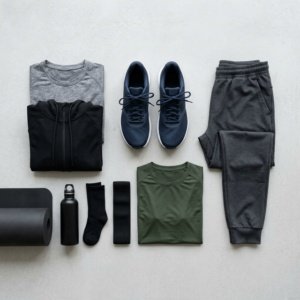
The market for branded sportswear in Europe is large, growing, and, for independent retailers, increasingly difficult to access through conventional channels. The major athletic and lifestyle sport brands – Puma, Nike, Adidas, and their closest competitors – have spent the past decade rationalizing their distributor networks and prioritizing their own direct-to-consumer channels, leaving a growing number of independent multi-brand stores and boutiques squeezed out of official supply.
Yet many of these same retailers are stocking exactly the brands their customers want. How?
The Official Distribution Squeeze
Understanding the current landscape begins with what has happened to official brand distribution. For most major sportswear labels, the past decade has seen a consolidation of authorized retail partnerships. Brands have reduced the number of retail accounts they supply directly or through appointed distributors, focused investment on flagship partners, and significantly expanded their own e-commerce and physical retail presence.
For independent retailers – particularly smaller operators in Central and Eastern Europe – accessing official Puma wholesale supply, for example, typically requires meeting minimum order thresholds that can run to tens of thousands of euros per season, demonstrating brand-appropriate flagship presentation, and navigating geographic exclusivity constraints that may already be held by a larger competitor in the same market.
The practical result is that a meaningful and growing percentage of independent fashion and sportswear retailers cannot access the brands their customers want through official channels, at commercial terms that make business sense.
Where the Inventory Actually Exists
The interesting structural reality is that the inventory these retailers want does exist in the B2B market – just not through the channels they’re accustomed to using.
Sportswear brands overproduce consistently. Production forecasting for volume athletic labels involves significant uncertainty – demand patterns vary by season, geography, and trend cycle in ways that even sophisticated planning tools fail to fully anticipate. The result is regular, predictable surplus inventory that needs to move outside primary retail channels before it depreciates significantly in value.
This surplus inventory – including Puma wholesale apparel, footwear overproduction from comparable brands, and cancelled retail orders from major European chains – enters the B2B secondary market in substantial volumes. The products are authenticated, often include complete size runs, and are available at prices that reflect their need to move quickly rather than their original retail positioning.
For independent retailers who can access this inventory reliably, it represents a commercially transformative sourcing opportunity. The challenge has historically been access.
The Access Infrastructure That Has Emerged
The past several years have seen the emergence of a category of private B2B wholesale platforms purpose-built to solve the access problem. These platforms operate as verified, curated marketplaces connecting suppliers – brands, distributors, large retailers with surplus – to a vetted network of B2B buyers: boutiques, multi-brand stores, resellers, and increasingly, emerging digital commerce operators.
The defining characteristics of effective platforms in this category include:
Verified access on both sides. Suppliers and buyers are onboarded only after confirming legitimate business credentials. This ensures that brand inventory reaches trade buyers appropriate to the brand’s positioning, and that buyers can rely on product authenticity.
Confidentiality infrastructure. Buyers and sellers transact without revealing their identities to each other. Suppliers can control which buyer types and geographies can see their inventory. This allows brands to move surplus without public exposure of the brand-discount association.
Real-time inventory. Unlike trade fairs or periodic distributor calls, private platforms update available inventory continuously. Buyers can monitor new listings and act quickly – a practical necessity, since desirable stock at attractive prices moves fast.
Low minimum entry points. Unlike official distributor relationships that typically require large seasonal commitments, private platform purchases can be made in smaller quantities, allowing buyers to test buying decisions before scaling up.
The Practical Buying Strategy
Independent retailers who have integrated private B2B platform sourcing into their buying model typically describe a similar strategic approach:
They don’t attempt to replace all primary-channel buying. Official distributor relationships, where viable, provide new-season product that carries brand freshness signals important for retail presentation and social media. Off-price platform buying complements this by providing the margin cushion needed to sustain fresh-season investment.
They know their customer’s brand preferences and size curve with precision. Off-price buying rewards specificity: the retailer who knows that their customer buys Puma in 42 and 43 for footwear and M/L for apparel will capture more value from a surplus listing than one who buys speculatively.
They build repetition. A single good outcome from a private platform purchase is interesting. Repeated purchasing of confirmed-seller lines – restocking what sells at the margin available through the platform – is where the structural advantage compounds.
The Competitive Implication
The retailers who have built systematic off-price sourcing into their model are not simply running lower-cost businesses. They’re running more resilient ones. Lower effective cost basis means each unit sold generates more margin. More margin means more capacity to absorb the sell-through variability that affects all independent retailers. More resilience means the ability to weather the demand volatility that has pressured retail across European markets.
In markets where two or three independent boutiques compete for the same customer base, access to the same brands at materially different costs creates a durable competitive advantage that is difficult to close through operational improvements alone.
Independent retailers who understand where surplus branded sportswear inventory exists – and access it through the right channels – are building margin structures that allow them to compete effectively on quality and brand representation without competing on the cost structures of full-price distribution.