Shankar Balasubramanian: The Visionary British Chemist Who Transformed Modern DNA Sequencing
A Journey from Chennai to Cambridge – How a Brilliant Mind Revolutionized Genomics and Medicine

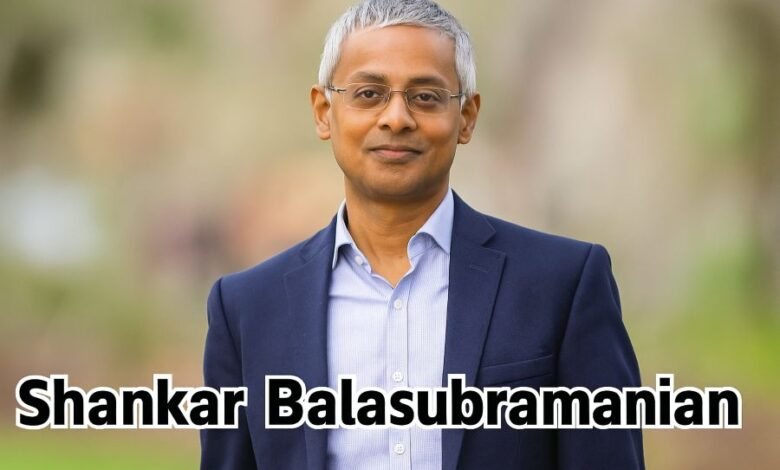
Table of Contents
ToggleIntroduction
Shankar Balasubramanian is a name that stands tall in the scientific world — a British chemist whose groundbreaking discoveries have forever changed how humanity understands and reads the code of life. Born in Chennai, India, and raised in the United Kingdom, he has become one of the most influential scientific minds of the 21st century. Known for co-inventing next-generation DNA sequencing technology, his work has fueled a new era of medical discovery, genetics, and biotechnology.
Through his innovation and persistence, Shankar Balasubramanian proved that one person’s vision can transform the boundaries of chemistry and biology. His career is a testament to the power of human intellect — showing both the positive potential of innovation and the challenging path of scientific pursuit.
Quick Bio
| Attribute | Details |
|---|---|
| Full Name | Sir Shankar Balasubramanian |
| Date of Birth | 30 September 1966 |
| Birthplace | Chennai, Tamil Nadu, India |
| Nationality | British |
| Ethnicity | Indian (Tamil origin) |
| Profession | Chemist, Academic, Inventor |
| Known For | Co-inventor of Sequencing-by-Synthesis DNA Technology |
| Current Position | Herchel Smith Professor of Medicinal Chemistry, University of Cambridge |
| Spouse | Dr. Veena Krishnan |
| Children | Sachin and Sashi |
| Awards | Knighted (2017), Breakthrough Prize (2022), Millennium Technology Prize (2020), Gairdner Award (2024) |
Early Life and Education
Born in the bustling city of Chennai in 1966, Shankar Balasubramanian moved with his family to the United Kingdom as a child. Growing up in rural Cheshire, he developed a love for problem-solving and curiosity about how nature works. This early fascination with science guided him toward one of the most prestigious institutions in the world — the University of Cambridge.
At Fitzwilliam College, Cambridge, he studied Natural Sciences, graduating with honors in 1988. He continued his studies by earning a PhD in Chemistry in 1991, where he explored enzyme mechanisms. His exceptional research talent led him to Pennsylvania State University in the United States for post-doctoral research, setting the foundation for his remarkable career as a British chemist with global influence.
Academic and Research Career
Returning to Cambridge in the mid-1990s, Shankar Balasubramanian began a journey that would reshape modern science. He became a University Lecturer in 1998, a Reader in Chemical Biology by 2003, and later the Herchel Smith Professor of Medicinal Chemistry in 2008. His work at Cambridge focused on understanding the chemistry and biology of nucleic acids — the building blocks of life.
His passion for unraveling the secrets of DNA led to discoveries about the structure and dynamics of genetic material. He identified G-quadruplexes, special four-stranded DNA structures that play key roles in gene regulation and cancer biology. His research merged chemistry and biology seamlessly, establishing him as one of the foremost British chemists of his generation.
The Birth of a Revolutionary Discovery
The most defining moment in Shankar Balasubramanian’s career came through his collaboration with fellow scientist David Klenerman. Together, they invented Sequencing-by-Synthesis (SBS) — the core technology behind next-generation DNA sequencing. This invention drastically reduced the cost and time required to read genetic information.
What once took years and billions of dollars can now be achieved in a day, at a fraction of the cost. This transformation unlocked new possibilities in personalized medicine, disease diagnosis, and biological research. The technology became the foundation of Illumina’s sequencing platforms, used worldwide in hospitals, laboratories, and research centers.
This monumental achievement not only changed scientific research but also revolutionized global healthcare — empowering doctors and researchers to understand diseases at the molecular level.
Entrepreneurial Success and Business Ventures
Shankar Balasubramanian’s genius extended beyond academia. In 1998, he co-founded Solexa Ltd, a company dedicated to commercializing the Sequencing-by-Synthesis technology. Solexa’s success attracted global attention and was later acquired by Illumina Inc., a leader in genomic sequencing.
He also co-founded Cambridge Epigenetix, now known as biomodal, which focuses on advanced epigenetic sequencing technologies. Through these ventures, he bridged the gap between pure research and commercial innovation, demonstrating that scientific discoveries can also drive real-world impact and economic growth.
These achievements highlight the positive side of innovation — the potential to save lives and create industries — while also reminding us of the intense pressure and competition faced by scientists in pushing boundaries.
Major Awards and Global Recognition
Sir Shankar Balasubramanian’s brilliance has been recognized globally. His long list of prestigious awards includes:
-
Fellow of the Royal Society (2012)
-
Knighted in 2017 for services to science and medicine
-
Royal Medal (2018)
-
Millennium Technology Prize (2020)
-
Breakthrough Prize in Life Sciences (2022)
-
Canada Gairdner International Award (2024)
-
Induction into the National Inventors Hall of Fame (2024)
Each of these honors celebrates his role as a visionary British chemist who brought chemistry and biology together to revolutionize the world’s understanding of DNA.
Personal Life
Beyond his professional excellence, Shankar Balasubramanian leads a balanced personal life. He is married to Dr. Veena Krishnan, a general practitioner, and together they have two children, Sachin and Sashi. Despite his scientific fame, he is known for humility, focus, and dedication to family — values that have guided his success.
Legacy and Impact
Sir Shankar Balasubramanian’s legacy extends beyond his discoveries. He has reshaped genomics, empowered medical diagnostics, and influenced new generations of scientists. His work in DNA sequencing made it possible for researchers to decode genetic information at an unprecedented scale — impacting fields such as oncology, virology, and neuroscience.
His life reflects a powerful message: scientific progress comes from curiosity, collaboration, and perseverance. The world today owes much of its genomic advancement to his determination and intellect. As a British chemist of Indian heritage, his story inspires young scientists to dream globally and think boldly.
Conclusion
Shankar Balasubramanian’s journey — from a young student in India to a world-renowned British chemist — embodies the spirit of innovation and resilience. His revolutionary work in DNA sequencing not only advanced science but also changed medicine forever. His success shows that even from humble beginnings, one mind can rewrite the future of humanity.
As the world continues to explore genetic solutions to health challenges, his legacy will shine as a guiding light — proving that the intersection of chemistry, biology, and imagination can truly change the world.
FAQs
Who is Shankar Balasubramanian?
He is a British chemist of Indian origin, best known for co-inventing next-generation DNA sequencing technology that revolutionized genomics.
What is Shankar Balasubramanian famous for?
He is the co-inventor of Sequencing-by-Synthesis, the technology used in Illumina DNA sequencers worldwide.
Where does Shankar Balasubramanian work?
He is the Herchel Smith Professor of Medicinal Chemistry at the University of Cambridge and a Senior Group Leader at the Cancer Research UK Cambridge Institute.
What companies did he found?
He co-founded Solexa Ltd and Cambridge Epigenetix (now biomodal), both leading biotechnology companies.
What awards has he received?
He has been knighted and honored with global scientific awards such as the Millennium Technology Prize, Breakthrough Prize, and Gairdner International Award.
Why is his work important?
His discoveries made genome sequencing faster and more affordable, revolutionizing medicine, cancer research, and genetic diagnostics.