Madeline Grant: Powerful Rise in British Political Journalism
Her journey from Oxford and policy research to The Telegraph, The Spectator and Westminster sketch writing

Introduction
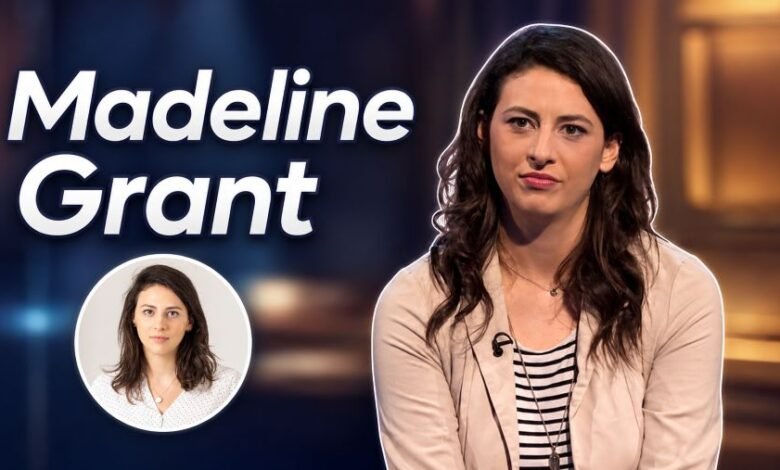
Madeline Grant is a British journalist, editor, columnist and parliamentary sketch writer known for her witty observations on Westminster politics.
She developed her career through political research, speechwriting, economic-policy publishing and newspaper commentary before becoming a recognised voice in British political journalism.
Grant previously held senior writing and editorial roles at The Telegraph. She now works as assistant editor and parliamentary sketch writer at The Spectator, where she writes about Parliament, political leadership, public policy and British culture.
Madeline Grant Quick Facts
| Detail | Verified Information |
|---|---|
| Full Name | Madeline Grant |
| Nationality | British |
| Profession | Journalist, editor, columnist and parliamentary sketch writer |
| Education | English degree from St Hilda’s College, Oxford |
| Graduation Year | 2014 |
| Early Roles | Parliamentary researcher, speechwriter and Newsweek reporter |
| Former Organisation | Institute of Economic Affairs |
| Former Newspaper | The Telegraph |
| Current Publication | The Spectator |
| Current Position | Assistant editor and parliamentary sketch writer |
| Podcast | Quite Right! |
| Husband | The Rev Fergus Butler-Gallie |
| Known For | Westminster sketches, political commentary and editorial work |
Who Is Madeline Grant?
Madeline Grant is a British political journalist whose work combines parliamentary reporting, satire, cultural references and opinion writing.
She is particularly known for covering debates, Prime Minister’s Questions, political speeches and important moments inside the House of Commons.
Instead of producing only a formal summary of political events, Grant studies the personalities, reactions and atmosphere surrounding them.
Her sketches often describe how politicians speak, behave and respond under pressure. This approach helps readers understand the political meaning behind events while also seeing the theatrical side of Westminster.
Grant’s career places her within the wider world of British political reporting, although her written and satirical approach differs from the television journalism associated with Beth Rigby.
Madeline Grant’s Education
Grant attended King Edward VI High School for Girls in Birmingham before studying English at St Hilda’s College, University of Oxford.
She graduated in 2014.
An English degree requires close reading, structured argument, clear writing and an understanding of how language creates meaning.
These skills became important parts of Grant’s later journalism. Her political sketches regularly use literary comparisons, character descriptions and carefully chosen humour.
Her university years also placed her in an environment where public speaking, debating and student politics were highly visible.
That exposure helped prepare her for a career focused on political arguments, persuasive language and public communication.
Early Career as a Researcher and Speechwriter
After completing her studies, Grant worked as a parliamentary researcher and speechwriter.
A parliamentary researcher follows legislation, political announcements, policy debates and government activity. The role requires accuracy because politicians often depend on researchers when preparing speeches, questions and public statements.
Speechwriting developed a different but connected skill. It taught Grant how political ideas are shaped into direct language for public audiences.
She also worked as a reporter for Newsweek magazine.
These early positions gave her experience in politics from several directions. She saw how policies were researched, how political messages were prepared and how journalists presented events to readers.
Her work during this period created a strong foundation for her later career as a political columnist and Westminster sketch writer.
Institute of Economic Affairs Career
Grant later became editorial manager at the Institute of Economic Affairs, a UK think tank focused on economic and social-policy debates.
According to her official Institute of Economic Affairs profile, she commissioned and managed content for the organisation’s blog while also helping to create material for podcasts and other media platforms.
The same profile confirms her earlier experience as a parliamentary researcher, speechwriter and Newsweek reporter, as well as her 2014 English degree from St Hilda’s College, Oxford.
Her role at the IEA required both editorial judgement and knowledge of public policy.
She needed to identify relevant subjects, work with contributors and present economic arguments in language that ordinary readers could understand.
The position also gave her experience in digital publishing and podcast production before audio journalism became a larger part of her public career.
Joining The Telegraph
Grant joined The Telegraph in 2019 and became part of its comment and opinion operation.
She worked as an assistant comment editor, helping to commission, edit and prepare opinion articles for publication.
Comment editing differs from straight news reporting. Editors must recognise strong arguments, question unsupported claims and ensure that articles remain clear, timely and engaging.
Grant also wrote columns covering politics, culture, public policy and social debates.
Her ability to combine serious analysis with humour helped establish a distinctive writing voice within the newspaper.
The role gave her experience similar to other British journalists who work across reporting and specialist analysis, although economics journalist Ed Conway focuses more heavily on financial data, markets and public finance.
Becoming a Parliamentary Sketch Writer
Grant later became a parliamentary sketch writer for The Telegraph.
Parliamentary sketch writing is a specialised form of political journalism. It records events inside Parliament while paying close attention to character, mood, language and political theatre.
A news report may explain the main argument made during Prime Minister’s Questions.
A sketch may also describe the confidence of the speakers, the mood of backbench MPs, the quality of an attack and the reactions around the chamber.
Grant became known for using sharp descriptions and literary references to make these moments accessible.
Her sketches did not ignore political substance. Instead, humour became a way to reveal weak performances, changing relationships and the pressure surrounding government decisions.
This combination of observation and analysis helped her build a recognisable reputation among readers of British political commentary.
Madeline Grant at The Spectator
Grant moved into a senior position at The Spectator in 2025.
Her official The Spectator author page identifies her as the publication’s assistant editor and parliamentary sketch writer. It also contains her latest political articles and podcast appearances.
As assistant editor, she contributes to the wider editorial direction of the magazine.
As parliamentary sketch writer, she continues observing events inside Westminster and turning them into readable political commentary.
The move represents an important stage in her career because it combines senior editorial responsibility with the writing work for which she is best known.
Her position also places her within a publication with a long history of covering British politics, culture, books and public affairs.
Madeline Grant’s Current Role in 2026
As of July 2026, Grant remains assistant editor and parliamentary sketch writer at The Spectator.
Her author archive was active on July 1, 2026, showing that she continues to publish and participate in current political discussions.
Her work now covers several formats.
She writes parliamentary sketches, publishes political commentary, joins podcast discussions and contributes to wider editorial coverage.
This gives her a broader role than a journalist who works only as a newspaper columnist.
She contributes both publicly through her own articles and behind the scenes through editorial decision-making.
Quite Right! Podcast with Michael Gove
Grant co-presents Quite Right!, a political and cultural podcast from The Spectator, with the magazine’s editor Michael Gove.
The programme discusses Westminster events, party politics, government decisions, culture and international developments.
Podcasting allows Grant to explain ideas in greater depth than is normally possible in a short newspaper column.
The conversational format also gives listeners a clearer sense of her political analysis, humour and reactions to developing stories.
Episodes may include interviews, disagreements and discussion of the personalities influencing British public life.
Her work on the programme strengthens her position as a multimedia political commentator rather than only a print journalist.
Broadcasters such as Zain Asher have built careers around international television news, while Grant’s audio work remains closely connected to opinion, Westminster and British political culture.
Television and Radio Appearances
Grant has also appeared on British television and radio as a political commentator and newspaper reviewer.
Her past appearances have included programmes such as Politics Live, Good Morning Britain and Any Questions?
Broadcast commentary requires a different set of skills from written journalism.
A columnist can carefully edit a sentence before publication. A television or radio guest must respond quickly, explain a position clearly and handle challenges in real time.
Grant’s appearances show that she can move between edited writing and live discussion.
This ability is increasingly important as modern journalists communicate through newspapers, magazines, podcasts, television clips and social-media videos.
Her commentary-led role is different from the structured news presentation associated with broadcasters such as Kasia Madera.
What Is a Parliamentary Sketch Writer?
A parliamentary sketch writer observes political events and describes them through a mixture of reporting, humour and personal interpretation.
The writer normally attends major debates, statements and Prime Minister’s Questions.
They listen to the words used by politicians but also study delivery, interruptions, reactions and body language.
This makes a sketch different from a conventional political report.
A standard report usually places the most important policy development first. A sketch may begin with an awkward moment, an unusual phrase or a revealing reaction inside the chamber.
The purpose is not simply to make politics funny.
Strong parliamentary sketches can show readers how authority, confidence and reputation operate inside political institutions.
Madeline Grant’s Writing Style
Grant’s style is based on close observation and controlled humour.
She often uses comparisons from literature, popular culture and everyday life to describe political figures.
These references make complicated Westminster events easier to imagine.
Her writing also focuses on performance. She considers whether a politician appears confident, prepared, uncomfortable or unable to control the chamber.
Satire allows her to challenge political arguments without turning every article into a formal policy essay.
However, the effectiveness of a sketch depends on accuracy. Humour must be connected to what actually happened rather than replacing factual reporting.
Grant’s combination of personality and commentary has similarities with the voice-led journalism of Giles Coren, although their main subjects and professional roles are different.
Why Madeline Grant Is Famous
Madeline Grant is famous for her work as a British parliamentary sketch writer and political commentator.
She became widely recognised through her columns and sketches at The Telegraph.
Her move to The Spectator increased her editorial responsibility and kept her closely involved in daily Westminster coverage.
She is also known for discussing politics through television appearances, radio programmes and Quite Right!
Her public identity is therefore connected with several related areas:
- British political journalism
- Parliamentary sketch writing
- Westminster commentary
- Newspaper opinion editing
- Political podcasting
- Cultural and social commentary
These areas create strong long-term interest in her career while her regular coverage of current political events also produces short-term search demand.
Madeline Grant and Fergus Butler-Gallie
Madeline Grant is married to the Rev Fergus Butler-Gallie.
Butler-Gallie is an Anglican priest, writer and broadcaster known for books about church history and the lives of members of the clergy.
Their engagement was publicly announced in 2024, and they married in July 2025.
Both have professional connections with writing, broadcasting and British public institutions.
Grant generally keeps the focus of her public profile on journalism rather than sharing extensive details about her private life.
Her Influence on Modern Political Commentary
Grant represents a style of journalism that sits between reporting, opinion and entertainment.
Political audiences often want more than a list of policies or quotations.
They also want to understand whether a leader performed well, whether an argument changed the atmosphere and how other politicians responded.
A skilled sketch writer can capture those details while keeping the article readable.
Grant’s work also shows why traditional parliamentary reporting remains relevant in the digital era.
Short video clips may show one exchange, but a written sketch can connect several moments and explain their wider political meaning.
Her career demonstrates how literary writing and political knowledge can work together within modern news coverage.
Frequently Asked Questions
Who is Madeline Grant?
Madeline Grant is a British journalist, editor, columnist and parliamentary sketch writer.
Where does Madeline Grant work now?
She works at The Spectator as assistant editor and parliamentary sketch writer.
Did Madeline Grant leave The Telegraph?
Yes. She moved from The Telegraph to a senior editorial and sketch-writing position at The Spectator in 2025.
What did Madeline Grant study?
She studied English at St Hilda’s College, University of Oxford.
When did Madeline Grant graduate?
She graduated from Oxford in 2014.
What did she do before joining The Telegraph?
She worked as a parliamentary researcher, speechwriter, Newsweek reporter and editorial manager at the Institute of Economic Affairs.
What is Madeline Grant known for?
She is best known for humorous and analytical sketches about Parliament, Westminster and British politics.
What podcast does Madeline Grant present?
She co-presents Quite Right! with Michael Gove.
Who is Madeline Grant’s husband?
Her husband is the Rev Fergus Butler-Gallie, an Anglican priest, broadcaster and author.
Conclusion
Madeline Grant has built a career across political research, speechwriting, think-tank publishing, newspaper editing and parliamentary commentary.
Her English degree from Oxford helped develop the literary and analytical skills later seen in her political sketches.
Work at the Institute of Economic Affairs gave her editorial and policy experience, while The Telegraph introduced her writing to a wider national audience.
Her current position as assistant editor and parliamentary sketch writer at The Spectator marks a major stage in her professional journey.
Through articles, sketches, broadcasts and podcasts, she continues to turn Westminster politics into commentary that is informative, observant and entertaining.