Kenny Burns: Revealed Story of Forest’s European Champion
Remarkable Journey of a European Cup Winner

Introduction
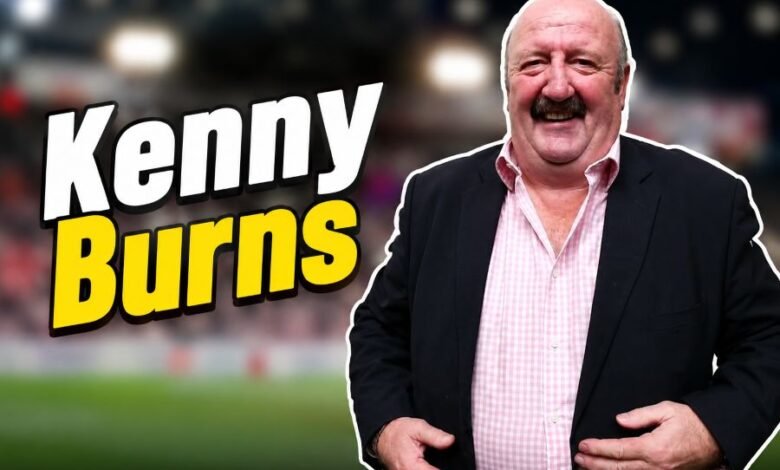
Kenny Burns is a former Scottish international footballer whose career was shaped by an unusual ability to succeed at both ends of the pitch. He played as a centre-forward, became an elite centre-back and helped Nottingham Forest rise from a newly promoted side to champions of England and Europe.
Born Kenneth Burns in Glasgow, he became famous for his physical playing style, competitive personality and the “Wild Man” image attached to him by the media. Behind that reputation was an intelligent and adaptable player who won major trophies, represented Scotland at a World Cup and produced decisive moments on some of football’s biggest stages.
Quick Facts
| Detail | Verified information |
|---|---|
| Full name | Kenneth Burns |
| Known as | Kenny Burns |
| Date of birth | 23 September 1953 |
| Age | 72, as of July 2026 |
| Birthplace | Glasgow, Scotland |
| Nationality | Scottish |
| Height | Approximately 1.80 metres or 5 feet 11 inches |
| Profession | Former professional footballer |
| Main positions | Centre-back and centre-forward |
| Scotland record | 20 senior appearances and one goal |
| Best known for | Winning two European Cups with Nottingham Forest |
| Playing status | Retired |
Early Life and Football Beginnings in Glasgow
Burns grew up near Peat Road in Nitshill, Glasgow. Both of his parents died while he was young, leaving his brothers and sisters to play an important part in raising him.
Football became a major influence during his childhood. He played through the Boys’ Brigade and later represented Hillwood, the Glasgow club that helped him develop the discipline and competitive qualities needed to attract professional attention.
Rangers, the club he supported as a boy, brought him into their youth system around 1969. However, he did not make a senior appearance and was released while still in his teens.
That early setback could have ended his professional ambitions. Instead, Burns moved south and joined Birmingham City in 1971, beginning a career that would eventually take him to the highest level of European football.
Building His Career at Birmingham City
Kenny Burns made his Football League debut for Birmingham City on 1 September 1971. He was only 17 when he appeared in a 1–0 defeat away to Hull City.
Although initially developed as a defender, his role changed after striker Bob Latchford left Birmingham in 1974. Burns was moved into attack and adapted successfully, using his strength, movement and aerial ability as a centre-forward.
Between 1971 and 1977, he made 170 league appearances and scored 45 goals for Birmingham. He also earned the club’s Player of the Year award during this period.
His performances as a forward brought international recognition. Burns made his senior Scotland debut against West Germany on 27 March 1974, beginning an international career that produced 20 caps and one goal. The Scottish Football Association’s official record describes him as a strong defender who could also pass accurately and play with creativity.
The Nottingham Forest Transformation
Nottingham Forest signed Burns from Birmingham City for approximately £150,000 in 1977. Brian Clough and Peter Taylor then made the decision that would define his career: they moved him from attack back into central defence.
Kenny Burns made his Forest league debut in a 3–1 away victory against Everton on 20 August 1977. His partnership with Larry Lloyd soon gave the newly promoted side a powerful defensive foundation.
The change of position did not remove his attacking instinct. Burns remained dangerous from set pieces and continued to score important goals, but his reading of the game, passing and positional awareness became just as valuable as his physical approach.
His first season at the City Ground produced extraordinary results. Nottingham Forest won the 1977–78 First Division title in their first campaign after returning to the top flight. They also won the League Cup, with Burns lifting the trophy as stand-in captain because John McGovern was injured.
Burns was named FWA Footballer of the Year and Nottingham Forest’s Player of the Season. The honours showed that his success was based on much more than the aggressive public image often associated with him.
European Cups and the Goal at Camp Nou
Forest’s domestic success quickly developed into European dominance. Burns played at centre-back as the club defeated Malmö 1–0 in the 1979 European Cup final in Munich.
A year later, he was part of the side that retained the trophy by beating Hamburg 1–0 at Madrid’s Santiago Bernabéu Stadium. Winning consecutive European Cups placed Burns and his teammates among the most successful English club sides of their generation.
One of his most memorable individual contributions came in the UEFA Super Cup against Barcelona. Forest carried a 1–0 advantage into the second leg at Camp Nou, but Barcelona levelled the aggregate score through a penalty.
Burns responded with a headed equaliser in the 42nd minute. The match ended 1–1, giving Forest a 2–1 aggregate victory and the trophy. UEFA’s official account of the final confirms that his goal restored Forest’s lead and secured the club’s Super Cup triumph.
Scotland Career and the 1978 World Cup
Kenny Burns represented Scotland between 1974 and 1981. His only senior international goal came against East Germany in October 1974.
He was selected for Scotland’s squad at the 1978 FIFA World Cup in Argentina. Burns appeared in the group-stage matches against Peru and Iran before Scotland were eliminated on goal difference.
His final senior international appearance came against Wales on 16 May 1981. His 20-cap career was particularly unusual because Scotland used him during a period in which he had experience as both a top-flight attacker and a European Cup-winning defender.
Leeds United and the Later Years
Leeds United paid approximately £400,000 to sign Burns from Nottingham Forest in 1981. He made 56 league appearances, scored twice and was named the club’s Player of the Year for the 1982–83 season.
He later represented Derby County, spent a short loan period with Notts County and completed his final Football League season with Barnsley in 1985–86. A move to Swedish club IF Elfsborg followed, although he did not make a first-team league appearance there.
Burns continued playing in non-league football with Sutton Town, Stafford Rangers, Grantham Town, Gainsborough Trinity, Willenhall Town, Ilkeston Town and Oakham United. He also took on player-coaching responsibilities and was associated with Telford United as an assistant manager in 1993.
His extended career showed that football remained central to his life long after the European trophies and international appearances had ended.
Personal Life
A television profile recorded in 1978 showed Kenny Burns living in Toton, Nottinghamshire, with his wife, Louise. The programme included scenes from their home, his collection of football honours and Burns exercising with his dog.
The archive confirms that Louise was his wife at that time. Later details about his marriage have not been established in the verified research, so his current relationship status should not be assumed.
Challenges and Health
Burns faced several turning points during his career. Rangers released him as a teenager, his position changed more than once, and an injury prevented him from playing in the 1979 League Cup final when Nottingham Forest retained the trophy.
In August 2025, Burns publicly discussed being diagnosed with dementia. During the same period, he returned to Hillwood Football Club in Glasgow and met young players at a summer training camp.
He brought along the replica European Cup presented to members of Forest’s back-to-back winning teams. The visit connected his earliest football experiences with the achievements that later made him famous.
Playing Style and Public Image
Burns was widely associated with strength, hard tackling and an intimidating presence. Those qualities helped create his “Wild Man” reputation.
However, that description captures only part of his game. His ability to move between defence and attack required technical understanding, tactical awareness and considerable adaptability.
He could compete physically, pass accurately and provide a goal threat in important matches. His decisive header against Barcelona remains one of the clearest examples of how his defensive and attacking qualities could combine.
Legacy and Impact
Kenny Burns occupies a distinctive place in British football history. Few players have moved from centre-back to centre-forward and then returned to defence before winning the country’s leading individual football award.
His major honours with Nottingham Forest included the First Division championship, two League Cups, two European Cups, the Charity Shield and the UEFA Super Cup. Supporters later selected him in historic teams at both Nottingham Forest and Birmingham City, reflecting the lasting respect he earned at two different clubs.
His story is ultimately one of adaptability. A teenager released by Rangers became an international forward, an award-winning defender and a central figure in one of English football’s greatest club achievements.
Conclusion
Kenny Burns became famous for his toughness, but his career was built equally on intelligence, versatility and resilience. From his Glasgow beginnings to European Cup finals, he repeatedly adapted when his role or circumstances changed.
His two European Cups remain the most visible part of his record, yet his transformation from striker to champion defender is what makes his journey especially memorable.
Kenny Burns remains a defining figure from Nottingham Forest’s rise to English and European football glory.
Related Football Profiles