Tim Warrillow: The Entrepreneur Who Made Mixers Matter
How the British co-founder of Fever-Tree transformed an ignored drinks product into a premium global brand

Introduction
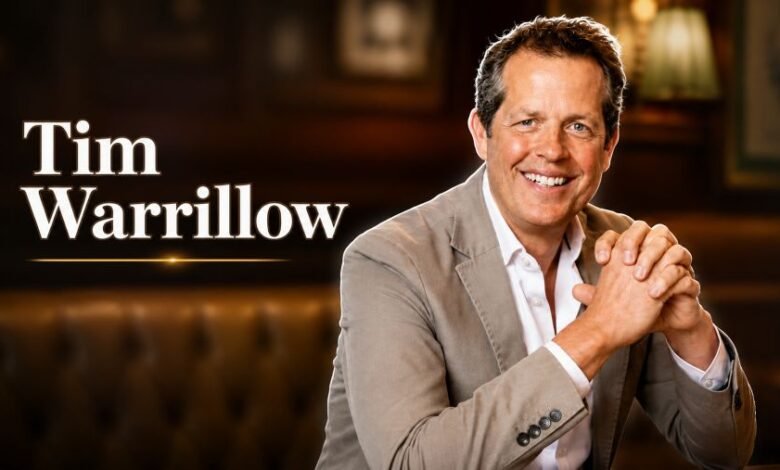
Tim Warrillow is a British entrepreneur and business leader best known for co-founding Fever-Tree with Charles Rolls. As of July 2026, he remains the co-founder and chief executive officer of the premium drinks company.
Warrillow recognised a simple problem in the drinks industry. People were paying high prices for premium gin and other spirits, but they were often mixing them with ordinary tonic water. He believed the quality of the mixer should match the quality of the spirit.
That observation led to the creation of Fever-Tree. The company launched its first tonic water in 2005 and later expanded into ginger beer, flavoured sodas, lemonades, cocktail mixers and alcohol-free drinks.
Today, Warrillow continues to guide Fever-Tree’s international strategy, product development and growth in the United States. Fever-Tree’s official investor profile confirms that he remains its co-founder and CEO.
Tim Warrillow Quick Facts
| Detail | Verified information |
|---|---|
| Full name | Timothy Daniel Gray Warrillow |
| Professional name | Tim Warrillow |
| Birth month and year | January 1975 |
| Age | 51 as of July 2026 |
| Nationality | British |
| Profession | Entrepreneur and drinks-industry executive |
| Known for | Co-founding Fever-Tree |
| Current position | Co-founder and CEO of Fever-Tree |
| CEO since | 2014 |
| Business partner | Charles Rolls |
| University | Newcastle University |
| Area of study | Business management and food marketing |
| Wife | Gemma Warrillow |
| Children | Four sons |
Who Is Tim Warrillow?
Tim Warrillow is the entrepreneur who helped turn Fever-Tree from a small British drinks idea into an international premium mixer company.
He co-founded the business with Charles Rolls, a drinks executive who had previously worked with Plymouth Gin. Together, they believed that the mixer category had been ignored while the market for premium spirits continued to grow.
Warrillow remains actively involved in Fever-Tree. He is not simply a former founder who left after the company became successful. As CEO, he oversees strategy, international development, brand positioning and relationships with major commercial partners.
His most important achievement is helping consumers understand that tonic water is not only a background ingredient. It can strongly affect the taste and quality of the complete drink.
Early Life and Education
Warrillow was born in January 1975. He has described being born in Wimbledon and growing up in Barnes, southwest London.
He later attended Newcastle University, where he studied business management with a special focus on food marketing.
His education connected business strategy with the food-and-drink industry. This knowledge became valuable when he began studying opportunities in premium consumer products.
Warrillow also gained practical business experience while he was still a student. He created a waitering agency during university, giving him early experience in hospitality, customer service and business management.
Starting a small service company allowed him to understand how businesses attract customers and solve everyday problems. This early step was different from Fever-Tree, but it helped develop his entrepreneurial thinking.
A similar ability to turn practical knowledge into a specialised business can be seen in Oliver Norris’ journey from racing into simulator technology.
Early Career in Advertising
After university, Warrillow joined a London advertising and branding agency in 1998.
His work introduced him to brand identity, marketing, consumer behaviour and product positioning. These skills later became important when he needed to explain why customers should pay more for Fever-Tree than for an ordinary mixer.
A premium product cannot succeed through quality alone. Customers must also understand what makes it different.
Warrillow’s advertising experience helped him communicate a clear message: premium spirits deserve premium mixers.
He later established a business-development consultancy. Part of its work involved identifying commercial opportunities in the premium food-and-drink market.
It was through this professional work that he met Charles Rolls.
Meeting Charles Rolls
Charles Rolls had already built strong experience in the drinks industry. He had worked with Plymouth Gin and understood the growing demand for premium spirits.
Warrillow and Rolls noticed the same gap in the market.
Consumers were becoming more interested in the quality, origin and flavour of gin. However, mixers had not improved at the same speed. Many tonic waters still depended heavily on artificial ingredients and mass-market production.
The two men believed a better mixer could improve the complete drinking experience.
Their partnership combined different skills. Rolls brought knowledge of spirits and the drinks trade, while Warrillow brought experience in marketing, branding, hospitality and business development.
This type of partnership is common in strong businesses. One founder may understand the product or industry, while another knows how to build and communicate the brand.
British business leader Charles Dunstone also challenged an established market by giving customers a different choice in telecommunications.
Why Tim Warrillow Created Fever-Tree
The original Fever-Tree idea was based on a simple question: why place a low-quality mixer inside an expensive drink?
Warrillow and Rolls believed that the mixer should support the spirit rather than hide its flavour.
They began searching for natural ingredients that could create a cleaner and more distinctive tonic water. Their aim was not only to design attractive packaging. They wanted the difference to be noticeable when customers tasted the drink.
Developing the right product required research, travel and repeated testing.
Warrillow searched for ingredients in different parts of the world. Quinine was especially important because it creates the bitter flavour associated with tonic water.
His search took him to the Democratic Republic of the Congo, where he visited a plantation producing high-quality quinine. He later said Fever-Tree continued working with the same source more than two decades later.
The company also sourced ingredients such as ginger, citrus oils and botanical flavours from regions known for producing them.
This ingredient-led approach gave Fever-Tree a clear identity. The brand could explain not only what it sold but why its product tasted different.
When Was Fever-Tree Founded?
Fever-Tree was formally co-founded by Tim Warrillow and Charles Rolls in 2004.
The company’s first Indian Tonic Water reached the market in 2005.
Some reports connect Fever-Tree’s beginning with 2003 because that was when early discussions and research were taking place. However, 2004 is the company’s recognised founding year, while 2005 is the first-product launch year.
The name Fever-Tree comes from the cinchona tree. Quinine is extracted from cinchona bark and has a long historical connection with treating malaria-related fever.
Launching the First Tonic Water
Warrillow did not depend only on supermarkets when launching Fever-Tree.
The company initially focused strongly on bars, pubs, restaurants and hotels. This approach allowed customers to taste the tonic water alongside premium spirits.
It was an effective strategy because tonic water is easier to understand through experience than through advertising alone.
When customers tasted a familiar drink made with a different mixer, they could decide whether the new product improved it.
Bartenders also became important supporters. They could recommend Fever-Tree, explain its ingredients and introduce it to customers who might not have noticed the brand inside a supermarket.
This hospitality-first strategy helped Fever-Tree build professional trust before becoming widely available through retail shops.
Competing With Larger Brands
Fever-Tree entered a category dominated by established companies, especially Schweppes.
Many people believed a small new company would struggle to challenge a brand with hundreds of years of history and worldwide recognition.
Warrillow did not attempt to make Fever-Tree the cheapest product. He positioned it as a premium alternative for consumers who cared about taste, ingredients and the quality of the entire drink.
This strategy gave the company its own space in the market.
By the end of 2017, Fever-Tree had become Britain’s leading retail mixer brand. In 2021, it also overtook Schweppes to become the leading tonic-water brand in the United States by value.
Fever-Tree’s growth demonstrated that an established category can still contain opportunities when customers are not being offered enough choice.
Building a Premium Drinks Brand
Fever-Tree was not successful simply because it sold tonic water at a higher price.
The company connected several important elements:
- Carefully sourced ingredients
- Clear product positioning
- Attractive packaging
- Strong hospitality relationships
- Consistent premium branding
- International distribution
- A simple message customers could understand
The brand also benefited from the rise of premium gin.
As more consumers became interested in craft spirits and cocktail culture, they began paying closer attention to every ingredient in the glass.
Fever-Tree was positioned to serve that changing demand.
Warrillow’s strategy shows that timing matters in business. A strong idea can grow faster when it connects with a wider change in consumer behaviour.
Fever-Tree’s Stock-Market Listing
Fever-Tree joined London’s Alternative Investment Market, commonly known as AIM, in November 2014.
The listing valued the company at approximately £154 million.
Warrillow became CEO in the same year. This changed the scale of his responsibilities.
Running a small founder-led company is different from leading a publicly traded international business. A listed company must communicate with investors, publish financial reports, follow market regulations and balance short-term expectations with long-term plans.
Warrillow continued to lead Fever-Tree through this transition.
The experience of growing a founder-led company into a larger financial organisation can also be explored through Henry Moser’s work with Together Financial Services.
Tim Warrillow’s Work as CEO
As chief executive officer, Warrillow is responsible for Fever-Tree’s overall business direction.
His work includes:
- Protecting the company’s premium image
- Developing new product categories
- Entering international markets
- Strengthening retail and hospitality distribution
- Managing major commercial partnerships
- Responding to changes in drinking habits
- Communicating with shareholders
- Supporting long-term company growth
One of his biggest challenges is expanding Fever-Tree without weakening the identity that made the company successful.
The brand began with tonic water, but it cannot depend on one product forever.
Warrillow has therefore guided its expansion into ginger beer, ginger ale, lemonade, flavoured soda, cocktail mixers and sophisticated alcohol-free drinks.
Expanding Beyond Tonic Water
Fever-Tree is increasingly becoming a broader premium soft-drinks company.
Its products now include:
- Indian tonic water
- Light tonic water
- Mediterranean tonic water
- Elderflower tonic water
- Ginger beer
- Ginger ale
- Lemonade
- Flavoured sodas
- Cocktail mixers
- Alcohol-free drinking options
This wider range allows Fever-Tree to serve different customers and drinking occasions.
Some consumers still use the products with gin, vodka, whisky or tequila. Others drink Fever-Tree sodas without alcohol.
This change is important because drinking habits are evolving. Many adults are reducing alcohol consumption while still wanting an enjoyable and premium drink when socialising.
Warrillow has worked to place Fever-Tree on both sides of this trend.
Partnership With Molson Coors
Fever-Tree announced an important partnership with Molson Coors in January 2025.
Under the agreement, Molson Coors became responsible for marketing, sales, distribution and parts of Fever-Tree’s production in the United States.
Molson Coors also invested approximately £71 million to acquire an initial 8.5% stake in Fever-Tree.
The partnership gives Fever-Tree access to a larger American distribution system. This can help the company reach more supermarkets, restaurants, hotels and bars.
It also allows more products to be manufactured closer to American customers, reducing the need to transport large quantities from Britain.
For Molson Coors, Fever-Tree supports a wider strategy of expanding beyond traditional beer.
The partnership had some early costs, but Warrillow described the United States as Fever-Tree’s largest growth opportunity.
Tim Warrillow’s Current Work in 2026
As of July 2026, Warrillow remains Fever-Tree’s co-founder and CEO. The official company profile states that he has led the group as CEO since 2014.
Fever-Tree reported adjusted core profit of £42.4 million for 2025, down from £50.7 million a year earlier. The decline was affected by initial costs connected with the Molson Coors partnership and a disputed UK packaging charge.
However, US revenue grew by 6% on a constant-currency basis during 2025.
A Reuters report on Fever-Tree’s 2026 results stated that Warrillow expected the US partnership to create greater scale and stronger execution during 2026.
His current priorities include:
- Growing sales in the United States
- Improving production and distribution
- Expanding non-tonic products
- Serving alcohol-free drinking occasions
- Protecting Fever-Tree’s premium position
- Managing costs and investor expectations
What Makes Tim Warrillow’s Business Approach Different?
He improved an ignored product
Warrillow did not invent tonic water.
Instead, he identified a familiar product that had received limited innovation. He saw that the market for premium spirits had changed while the mixer category remained largely the same.
This made the opportunity easier for customers to understand.
He created a simple message
The idea that a premium spirit deserves a premium mixer is clear and memorable.
Customers do not need technical knowledge to understand why a poor mixer may reduce the quality of an expensive drink.
A simple message helped Fever-Tree explain its value quickly.
He used tasting to prove the idea
Rather than depending only on advertisements, Fever-Tree allowed customers to experience the product in bars and restaurants.
People could compare the complete drink and judge the difference themselves.
He avoided competing only on price
Fever-Tree did not try to become the lowest-priced tonic water.
Its position depended on quality, ingredients, taste, design and brand trust.
Competing on value rather than price helped protect its premium image.
He expanded carefully
The company moved beyond tonic water but remained connected to its original promise of improving adult drinks.
This balance is important. A company must find new customers without losing the identity that made existing customers trust it.
The challenge of growing a long-established international business while protecting its identity is also present in Merlin Swire’s leadership of the Swire Group.
Tim Warrillow’s Wife and Children
Tim Warrillow is married to Gemma Warrillow.
The couple have four sons. Public profiles have identified their children as Oscar, Barnaby, Louis and Billy.
A 2026 interview reported that the family lived in the New Forest and kept several animals, including sheep, cows, chickens and a dog.
Although Warrillow occasionally discusses family life in interviews, his public identity remains focused mainly on Fever-Tree and the drinks industry.
He does not use personal family content as the main way of promoting his professional work.
Tim Warrillow’s Financial Information
Warrillow has earned money through his leadership position, Fever-Tree share ownership and documented sales of company shares.
When Fever-Tree joined AIM in 2014, he received approximately £7.6 million by selling part of his holding.
He completed another large share sale in 2017 while continuing to lead the company.
Official company information listed him as a significant Fever-Tree shareholder in late 2025.
These documented transactions do not provide enough information to calculate his complete personal net worth. A reliable total would require details about his remaining assets, investments, taxes, debts and private finances.
For that reason, unsupported estimates from generic wealth websites should not be treated as fact.
Charity Partnership With Malaria No More UK
Fever-Tree has maintained a long-term partnership with Malaria No More UK.
The connection is linked to quinine and the cinchona tree, which are central to the history of tonic water.
The partnership began in 2013. By its tenth anniversary, the charity reported that Fever-Tree had contributed more than £1.75 million to efforts aimed at ending malaria.
Warrillow has said the cause has a meaningful connection with the company’s origins and ingredient story.
This support provides a clear example of a business connecting charitable work with an issue directly related to its history.
Challenges Faced by Fever-Tree
Fever-Tree’s growth has not always been smooth.
The company has faced:
- Supply-chain disruption
- Higher transport costs
- Inflation
- Changes in consumer spending
- Pressure on the hospitality industry
- Currency movements
- Stock-market expectations
- Production transition costs
- Packaging and environmental charges
The company’s share price has also moved significantly since its strongest growth period.
Warrillow has continued to argue that the underlying brand is stronger than short-term market movements may suggest.
His experience shows that building a successful company does not remove business risk. Larger companies face different problems involving investors, global operations, regulation and international competition.
Business Lessons From Tim Warrillow
Look closely at familiar products
Business opportunities are not limited to new technology.
An old product may contain an opportunity when customers have accepted weak quality or limited choice for many years.
Solve a problem customers can understand
Fever-Tree’s idea was easy to explain.
Customers already understood premium spirits, so the company only needed to show why the mixer mattered too.
Build credibility before rapid expansion
Fever-Tree used respected bars, hotels and restaurants to establish trust.
This gave the brand professional support before it became widely available.
Use specialist knowledge
Warrillow combined hospitality experience, food marketing and advertising knowledge.
These different skills supported the creation of a focused drinks brand.
Protect the reason people choose the product
Rapid growth can encourage a business to enter unrelated markets.
Fever-Tree expanded its range while remaining focused on premium adult drinks.
Find the right partners
The Molson Coors agreement shows that a growing company may need a larger partner to reach the next stage in an important market.
Partnerships can provide distribution, production capacity and local knowledge that would be difficult to build alone.
This focus on professional knowledge and quality also appears in Emily Abraham’s journey in the luxury resale market.
Why Tim Warrillow’s Story Matters
Tim Warrillow’s story matters because it demonstrates how a small observation can lead to a global business.
He noticed that consumers cared deeply about the spirit in their glass but often ignored the mixer.
He and Charles Rolls turned that mismatch into a clear business opportunity.
Their success did not depend on inventing an entirely new type of drink. It came from improving a product people already used and explaining why the improvement mattered.
Warrillow’s journey also shows that business success involves more than finding an idea.
It requires:
- Product development
- Reliable ingredient sourcing
- Strong branding
- Patient market education
- Effective distribution
- Financial management
- International planning
- The ability to adapt
Fever-Tree grew because these parts worked together.
Conclusion
Tim Warrillow is a British entrepreneur, the co-founder of Fever-Tree and the company’s continuing chief executive officer.
He began his career with experience in hospitality, advertising and business development. He later joined Charles Rolls in creating a premium tonic water designed to match the quality of premium spirits.
Their first product launched in 2005. Fever-Tree later became a publicly listed international company and expanded into numerous mixer and soft-drink categories.
As of 2026, Warrillow remains focused on growing the business in the United States, developing non-tonic products and reaching consumers who want premium alcoholic or alcohol-free drinks.
His greatest achievement is not simply building a successful tonic-water company. It is persuading millions of consumers to pay attention to a part of their drink that they had previously ignored.
Frequently Asked Questions
Who is Tim Warrillow?
Tim Warrillow is a British entrepreneur and the co-founder and CEO of Fever-Tree.
What is Tim Warrillow’s full name?
His registered full name is Timothy Daniel Gray Warrillow.
How old is Tim Warrillow?
Tim Warrillow is 51 years old as of July 2026. Public company records list his birth month and year as January 1975.
What is Tim Warrillow known for?
He is known for co-founding Fever-Tree and helping create the modern premium-mixer market.
Who founded Fever-Tree?
Fever-Tree was founded by Tim Warrillow and Charles Rolls.
When was Fever-Tree founded?
Fever-Tree was formally established in 2004. Its first tonic water launched in 2005.
Is Tim Warrillow still Fever-Tree’s CEO?
Yes. As of July 2026, Fever-Tree continues to identify him as its co-founder and chief executive officer.
What did Tim Warrillow study?
He studied business management at Newcastle University and specialised in food marketing.
What was Tim Warrillow’s first business?
He started a waitering agency while attending university.
Is Tim Warrillow married?
Yes. He is married to Gemma Warrillow, and they have four sons.
Why did Tim Warrillow create Fever-Tree?
He believed premium spirits were being weakened by ordinary mixers. He wanted to create a tonic water made with better ingredients and designed to complement high-quality spirits.
What does Tim Warrillow do now?
He continues to lead Fever-Tree’s global strategy, US growth, product expansion and premium brand development.