Peter Rigby: How a £2,000 Idea Built a £3.8 Billion Group
The British technology founder who created Rigby Group and helped SCC become a major European IT services company

Introduction
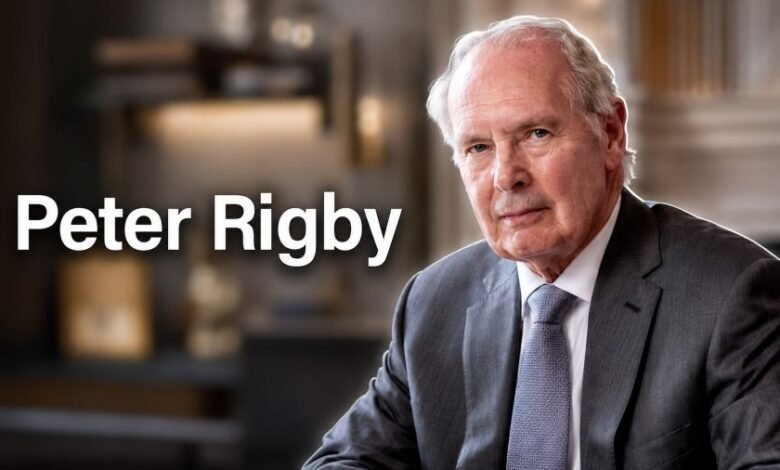
Sir Peter Rigby is a British technology entrepreneur, business founder and philanthropist. He is best known for establishing the company that developed into Rigby Group and its main technology business, SCC.
He entered the computer industry when large mainframe systems were still the dominant form of business technology. In 1975, at the age of 32, he used £2,000 of his savings to start an information-technology recruitment company in Birmingham.
That small venture became the foundation of a much larger organisation. The current Rigby Group profile describes the family-owned company as a business with turnover of around £4 billion.
As of July 2026, Peter Rigby remains Chairman and Founder of Rigby Group. Steve Rigby serves as Chief Executive Officer, while James Rigby is Chairman of SCC. The official Rigby Group leadership page confirms the present roles of all three family members.
Peter Rigby Quick Facts
| Detail | Verified information |
|---|---|
| Full professional name | Sir Peter Rigby |
| Birth year | 1943 |
| Birthplace | Liverpool, England |
| Profession | Technology entrepreneur and business chairman |
| Best known for | Founding Rigby Group and developing SCC |
| Current position | Chairman and Founder of Rigby Group |
| First company founded | Specialist Computer Recruitment |
| Business starting year | 1975 |
| Starting capital | £2,000 |
| Main business industry | Technology services |
| Sons involved in the group | James Rigby and Steve Rigby |
| Major British honour | Knighted in 2002 |
| Major French honour | Légion d’honneur in 2021 |
Who Is Peter Rigby?
Peter Rigby is the founder of one of Britain’s largest privately owned business groups.
His main achievement was not simply starting a company. He repeatedly changed the company as technology and customer needs developed.
His first business helped technology companies recruit skilled employees. He later moved into computer services, hardware distribution, system integration, data centres, cloud technology and other digital services.
This ability to identify a growing market can also be seen in the career of Charles Dunstone, who recognised the future importance of mobile communication and established Carphone Warehouse.
Peter Rigby followed a different path, but both founders entered developing technology markets before those markets became part of everyday life.
7 Verified Facts About Peter Rigby
1. He Started His First Business With £2,000
Peter Rigby started Specialist Computer Recruitment, commonly called SCR, in 1975.
He was 32 and had a young family. Instead of borrowing a large amount of money, he used £2,000 of his savings.
SCR helped companies find people who understood mainframes and other early computer systems. These trained employees were difficult to find because business computing was still a new industry.
Peter understood this problem through his earlier work with technology companies. He therefore entered a market he already knew rather than starting a business in an unfamiliar sector.
His decision shows that knowledge and timing can sometimes be more important than having a large starting budget.
2. He Sold the Recruitment Company for £1 Million
SCR became a successful recruitment business within a few years.
In 1982, around seven years after starting the company, Peter sold it to its managing director for approximately £1 million.
He did not use the sale as an opportunity to leave business. He reinvested the money into growing technology companies.
According to Peter Rigby’s recorded technology-industry interview, he wanted to develop a large organisation rather than depend on a single successful company.
This approach is also visible in the story of Henry Moser, who developed a specialist financial company by focusing on long-term growth in a market that larger institutions did not always serve well.
3. He Built the Business That Became SCC
Peter acquired and developed a Birmingham computer operation that became SCC.
He believed there was a strong future in providing professional and technical support for computers. At that time, many businesses concentrated mainly on selling machines.
Peter saw that customers would also need installation, management, maintenance and technical assistance.
When IBM introduced its personal computer, he recognised that smaller computers could eventually be used by many different types of organisations. SCC became an IBM dealer and later worked with other major technology manufacturers.
The company developed from computer sales into a wider technology-services business. This allowed it to remain useful even when particular machines and products became outdated.
4. He Kept Rigby Group Under Family Ownership
Peter Rigby received opportunities to take parts of his business onto the public stock market. However, he decided to maintain private family ownership.
He believed a private company could make long-term investments without facing constant pressure to deliver short-term returns to public shareholders.
Family ownership also allowed him to protect the values he considered important, including customer care, employee loyalty and independence.
His sons, James and Steve Rigby, joined the group and spent many years learning different parts of the organisation.
Steve is now CEO of Rigby Group. He leads its strategy, investments and financial direction. James is Chairman of SCC and oversees the technology company’s operations in several international markets. Peter remains Chairman and Founder.
5. He Expanded Beyond One Technology Business
Technology remained the foundation of Peter Rigby’s business career, but he did not depend on one product or service.
He expanded through company purchases, new divisions and international investment. His business interests have included technology services, distribution, hotels, property, aviation and finance.
Peter has explained that acquisitions can help a company enter new countries, gain skills or reach new customers. However, he has also openly acknowledged that not every acquisition was successful.
This honest view is important. Building a large business usually involves failed decisions as well as profitable ones.
Technology investor Joe Lonsdale has also worked across several connected industries, including software, investment and financial technology. Peter’s career began in an earlier period, but both men demonstrate how technology experience can lead to wider business opportunities.
6. He Was Knighted for His Contribution to Business
Peter Rigby was knighted in 2002 for his contribution to information technology and business in the West Midlands.
The honour recognised both his company-building work and his contribution to the wider regional economy.
In 2021, he also received the French Légion d’honneur. Rigby Group states that he was the first British businessman to receive the honour.
His connection with France developed through SCC’s presence in the country and its contribution to the French technology industry.
Peter has also held leadership positions connected with regional economic growth and community development.
7. He Remains Chairman After More Than 50 Years
Peter founded his first company in 1975. More than five decades later, he remains Chairman and Founder of Rigby Group.
He is no longer presented as the executive responsible for every daily business decision. Those responsibilities have moved to Steve, James and the group’s wider leadership team.
However, his continued position shows that he remains connected with the organisation’s ownership, values and long-term direction.
The group’s current profile describes it as a business with turnover of approximately £4 billion. It developed from one small recruitment venture into a major international organisation.
What Was Peter Rigby’s Early Life Like?
Peter Rigby was born in Liverpool in 1943 and attended a grammar school.
He became interested in flying while still young and originally wanted to join the Royal Air Force. His plans changed after his father, who worked as a railway clerk, lost his sight and could no longer work.
Peter instead entered the computer industry and helped support his family.
He began with NCR in its electronic-processing division, where he learned programming and computer-system design. He later moved to Honeywell because he wanted to work more directly with customers and sell technology solutions.
Peter also spent time with the John Diebold consultancy in Frankfurt. He later returned to Honeywell and became one of its youngest branch sales managers.
His early career gave him four useful skills:
- Understanding computer systems
- Explaining technology to customers
- Managing sales teams
- Recognising business problems
These skills later helped him establish his own company.
Did Peter Rigby Attend University?
Peter’s documented route into technology was based mainly on professional training and workplace experience.
He learned programming, system design, sales and management while working for technology companies. He has said that much of his education came through experience rather than extensive formal training.
This background is important because it shows that his business ideas developed from problems he saw directly in the computer industry.
He knew that companies struggled to find technical workers. He also knew that customers needed support after purchasing expensive systems. His first businesses were created around these practical needs.
How Did SCC Grow?
SCC grew by changing its services as the technology market changed.
The company was involved in areas such as computer reselling, system integration, distribution and professional support. It later developed data centres, secure cloud platforms and broader business-technology services.
Peter also established retail computer stores because he expected home computing to become important. The retail operation faced strong price competition and was eventually sold.
He later admitted that the group missed some opportunities in consumer computing and mobile phones. However, it refocused on SCC and its main business customers.
This willingness to leave a difficult market helped protect the larger organisation. A founder does not need to continue every project simply because it once appeared promising.
Why Did Peter Rigby Prefer a Private Company?
Peter believed private ownership gave the family more freedom to plan for the future.
Public companies must regularly answer to outside shareholders. Investors may expect fast growth and immediate financial returns.
A privately owned company can sometimes invest for a longer period before expecting results. It can also protect its culture more easily because control remains with a smaller group of owners.
Peter wanted Rigby Group to remain British-owned and controlled by the family. He also believed private ownership could support stronger employee relationships and better customer care.
This does not mean every private company succeeds. It means that private ownership matched the type of organisation Peter wanted to build.
Who Leads Rigby Group Today?
Rigby Group is now led across two generations of the Rigby family.
Sir Peter Rigby
Peter remains Chairman and Founder. His role represents continuity, ownership and the company’s long-term history.
Steve Rigby
Steve Rigby is Chief Executive Officer of Rigby Group. He is responsible for strategy, finance and family investments across private and public markets.
James Rigby
James Rigby is Chairman of SCC. He oversees the technology-services business and its international operations.
This structure allows the founder to remain involved while experienced next-generation leaders manage the group’s daily direction.
What Can Business Owners Learn From Peter Rigby?
Peter Rigby’s career provides several useful lessons for business owners.
Use Knowledge You Already Have
His first company served an industry he understood. He knew the computer market and recognised its shortage of skilled workers.
Solve a Clear Customer Problem
SCR helped companies find technical employees. SCC later helped organisations install, manage and support computer systems.
Reinvest After Success
Peter reinvested the proceeds from selling his recruitment company. This helped him create a larger collection of businesses.
Change When the Market Changes
SCC moved from early computer services into newer areas of technology. The group also left markets where its position was no longer strong.
Accept That Some Decisions Will Fail
Peter has spoken openly about acquisitions and business opportunities that did not produce the expected results. Learning from mistakes helped the group continue developing.
Prepare New Leaders Early
James and Steve worked inside the family organisation before reaching its highest positions. Their progression was gradual rather than sudden.
The value of building a business through practical experience is also visible in Emily Abraham’s entrepreneurial journey, although she works in a very different sector.
Peter Rigby’s Charity and Community Work
Peter Rigby has connected business success with social responsibility.
He has supported charitable work through the Rigby Foundation and other family initiatives. His interests have included education, health, lifelong learning and community development.
He has said that successful businesspeople have a responsibility to give something back to society.
Peter has also taken part in organisations connected with regional economic growth. His public roles have included work with Millennium Point and the Coventry and Warwickshire Local Enterprise Partnership.
His charitable work reflects a wider idea: business success can create resources, but those resources can also support education and opportunity for other people.
Peter Rigby and Aviation
Flying remained an important interest throughout Peter Rigby’s life.
He learned to fly as a teenager and had originally hoped to enter the RAF. Although family circumstances changed that career plan, he continued flying later in life.
Aviation also became one of Rigby Group’s business interests. The group invested in airports, helicopter operations and related services during its wider expansion.
His involvement in aviation connected an early personal ambition with his later business career.
Is Peter Rigby Still Active in Business?
Yes. Peter Rigby remains Chairman and Founder of Rigby Group as of July 2026.
However, his role should not be confused with the position of CEO.
Steve Rigby is the current group CEO, while James Rigby is Chairman of SCC. Peter’s present involvement is focused more on ownership, long-term direction and the values of the family business.
How Important Is Rigby Group?
Rigby Group is important because it represents a large British company that remained privately and family owned while expanding internationally.
Its history also covers several major stages of modern computing:
- Mainframe systems
- Personal computers
- Hardware distribution
- Business technology services
- Data centres
- Secure cloud platforms
- Artificial intelligence and modern digital services
Peter began working in technology before personal computers were widely used. The company survived because it continued adapting instead of depending on one product.
The career of Zhong Shanshan provides another example of a founder who built large companies by recognising practical consumer and market needs, although his businesses operate in beverages and healthcare rather than technology.
Why Is Peter Rigby’s Story Different?
Many founder stories focus on a single invention, product or sudden period of growth.
Peter Rigby’s story is different because his company developed gradually across more than 50 years.
He did not become known for designing one famous computer. His strength was understanding how technology could be sold, supported and used by organisations.
He repeatedly moved the company towards the services customers required at each stage of the technology industry.
His career is therefore not only a story about starting with £2,000. It is a story about reinvesting, adapting and planning for succession.
Conclusion
Sir Peter Rigby is the British technology entrepreneur who founded the business that became Rigby Group and SCC.
He began his own company in 1975 with £2,000 after gaining experience in programming, computer systems and technology sales. He sold his first recruitment company for approximately £1 million and reinvested the money into other technology operations.
Over the following decades, his organisation expanded across technology and several other business sectors. Peter kept the group under family ownership and gradually transferred executive responsibility to his sons.
As of July 2026, he remains Chairman and Founder. Steve Rigby is CEO of Rigby Group, while James Rigby serves as Chairman of SCC.
Peter Rigby’s career demonstrates that a small company can become a major organisation through industry knowledge, customer service, reinvestment, adaptation and careful long-term leadership.
Frequently Asked Questions
Who is Peter Rigby?
Peter Rigby is a British technology entrepreneur and the Chairman and Founder of Rigby Group. He is best known for building the organisation behind SCC.
What is Peter Rigby famous for?
He is famous for starting a technology recruitment company with £2,000 and developing his business interests into a large privately owned group.
When did Peter Rigby start his business?
He started Specialist Computer Recruitment in 1975 when he was 32 years old.
What is SCC?
SCC is Rigby Group’s technology-services business. It developed from Peter Rigby’s early work in computer sales, integration and support.
Is Peter Rigby still Chairman of Rigby Group?
Yes. As of July 2026, the company’s official board page identifies him as Chairman and Founder.
Who is the CEO of Rigby Group?
Steve Rigby is the current Chief Executive Officer of Rigby Group.
What is James Rigby’s role?
James Rigby is Chairman of SCC, the group’s main technology-services company.
Was Peter Rigby knighted?
Yes. He was knighted in 2002 for his contribution to information technology and business.
Did Peter Rigby sell his first company?
Yes. He sold the recruitment business in 1982 for approximately £1 million and reinvested the money into growing technology companies.
Is Rigby Group a family business?
Yes. Peter kept the organisation privately owned, and his sons later moved into its senior leadership positions.