Richard Burge: The Leader Connecting Trade, Policy and Public Service
From zoology and diplomacy to global trade, Richard Burge has built a remarkable career leading major British organisations and supporting international cooperation.

Introduction
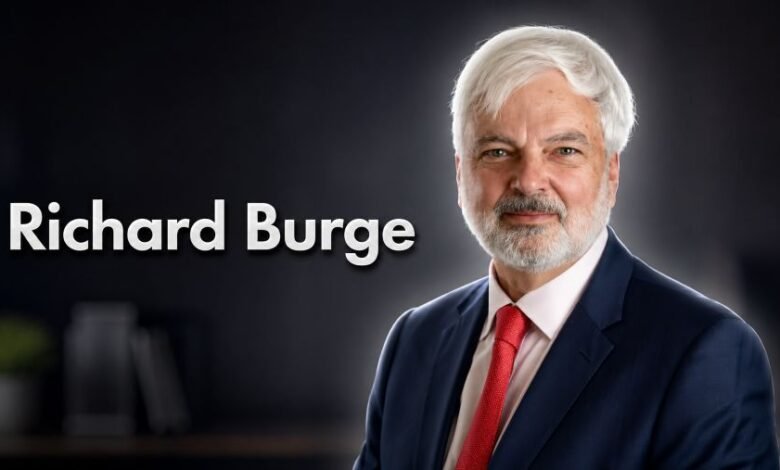
Richard Burge is a British international-affairs adviser and experienced organisational leader. He is known for leading the London Chamber of Commerce and Industry, Wilton Park, the Commonwealth Enterprise and Investment Council, the Countryside Alliance and the Zoological Society of London.
As of July 2026, Richard Burge is the Master of the Worshipful Company of World Traders. He also works independently on matters involving international trade, conflict, development and organisational leadership. The organisation’s official officers page confirms his current position.
His career is unusual because it has not remained inside one industry. He began with zoology and international education before moving into conservation, rural policy, diplomacy, business representation and global trade.
Richard Burge Quick Profile
| Detail | Verified information |
|---|---|
| Full name | Richard David Arthur Burge |
| Birth | April 1958 |
| Birthplace | Hong Kong |
| Nationality | British |
| Profession | International-affairs adviser and former chief executive |
| Current role | Master of the Worshipful Company of World Traders |
| Main professional areas | International trade, conflict, development and leadership |
| Education | Durham University |
| Research scholarship | University of Peradeniya, Sri Lanka |
| Major former organisations | LCCI, Wilton Park, CWEIC, Countryside Alliance and ZSL |
| Spouse | Karen Burge |
| Children | Two |
| Grandchildren | Four |
Who Is Richard Burge?
Richard David Arthur Burge is a British adviser whose work has connected business, government, international organisations and charities.
He is best known for serving as chief executive of several major organisations. These positions required him to manage finances, staff, public responsibilities, membership interests and relationships with governments.
Burge has also served on the boards of companies, charities, government agencies and educational institutions. His official World Traders profile states that he has worked in more than 65 countries, with particular experience in Africa, the Commonwealth and places affected by conflict.
His work belongs to the wider field of international leadership. Readers interested in how policy professionals influence Britain’s global position can also explore Sophia Gaston’s foreign-policy career.
Early Life and Education
Richard Burge was born in Hong Kong in April 1958.
He later studied at Hatfield College, Durham University, graduating in 1980. His original academic field was zoology, which helped shape the first part of his professional life.
Between 1983 and 1986, he was a Commonwealth Research Scholar at the University of Peradeniya in Sri Lanka. This experience gave him early exposure to another country, culture and education system.
His time overseas became important because his later career involved international development, diplomacy and work across many countries.
The path from education into international institutions is also visible in Francesca Cortini’s work with NATO and European organisations, although the two professionals entered the field during different generations.
Beginning His International Career
Burge spent around ten years working for the British Council.
His work included assignments connected with Africa and the Middle East. The British Council promotes educational and cultural relationships between the United Kingdom and other countries.
This period helped him develop experience in:
- International programme management
- Education and cultural relations
- Organisational leadership
- Government relationships
- Work across different countries
- Public-benefit services
These skills later allowed him to move beyond education and take responsibility for larger organisations.
Director General of the Zoological Society of London
Richard Burge became Director General of the Zoological Society of London during the 1990s.
The organisation manages London Zoo and Whipsnade Zoo while also carrying out scientific research and wildlife-conservation work.
Burge entered the organisation during a difficult financial period. His responsibilities included controlling costs, strengthening its purpose and supporting its scientific and conservation work.
On his professional website, Burge says the organisation moved from financial decline to a sustained operating surplus during his leadership. This performance description comes from his own account, but contemporary reporting also confirms that London Zoo had faced a serious threat of closure before his appointment.
His work at ZSL showed that his leadership was not limited to business. He was managing an organisation that combined public attractions, scientific research, conservation and charitable responsibilities.
Leading the Countryside Alliance
Burge became chief executive of the Countryside Alliance in 1999.
The organisation represented rural interests during an intense national debate about hunting, farming and countryside policy.
His role placed him inside one of the most politically sensitive public campaigns in Britain at the time. He had to communicate with members, politicians, journalists and communities with strongly different views.
Burge remained in the position until 2003.
The role was different from his conservation work at ZSL, but it required many of the same leadership skills, including membership management, public communication and organisational strategy.
His movement between charities, public campaigns and government-linked organisations is similar to the cross-sector leadership discussed in the profile of Abi Gbago and her UK public-service career.
Environmental and Rural Development Work
After leaving the Countryside Alliance, Burge took on several advisory and board positions.
His work included rural development, environmental strategy and conservation projects. He was connected with the African Parks Foundation and the Iwokrama International Centre for Rain Forest Conservation and Development in Guyana.
He also served as a Commissioner for Rural Communities.
These roles allowed him to combine his original interest in the natural world with his later experience in organisational management and public policy.
Chief Executive of Wilton Park
In 2009, Richard Burge became chief executive of Wilton Park.
Wilton Park is linked to the UK Foreign, Commonwealth and Development Office. It brings together people from governments, diplomacy, universities, businesses, the military, civil society and the media.
Its discussions cover international problems such as conflict, security, human rights, economic development and global cooperation.
Burge led Wilton Park for approximately eight years. His role required him to manage the organisation while protecting its ability to host serious and sometimes sensitive international discussions.
Wilton Park was one of the most important stages in his career because it brought together several parts of his earlier experience:
- International relations
- Government work
- Organisational finance
- Public policy
- Conflict and development
- Communication between different groups
Burge has said that he helped improve Wilton Park’s financial position and strengthen its importance to British foreign policy.
Commonwealth Scholarship Commissioner
Richard Burge served as a Commonwealth Scholarship Commissioner from 2012 to 2018.
The commission supports scholarships and fellowships for students from Commonwealth countries.
His official GOV.UK profile confirms the dates of his appointment.
This role connected his earlier work in international education with his later experience in diplomacy and Commonwealth affairs.
Commonwealth Enterprise and Investment Council
In 2017, Burge became chief executive of the Commonwealth Enterprise and Investment Council, commonly called CWEIC.
The organisation supports trade and investment between Commonwealth countries. It works with governments, companies and business leaders to build commercial relationships.
The Commonwealth Secretariat announced his appointment while he was still leading Wilton Park. He moved into the CWEIC role during preparations for the 2018 Commonwealth Heads of Government Meeting and Commonwealth Business Forum.
Burge remained connected with the organisation until 2019.
This appointment marked a clear move from diplomatic dialogue into international business and trade.
London Chamber of Commerce and Industry
Richard Burge became chief executive of the London Chamber of Commerce and Industry in early 2020.
The organisation represents businesses across London. Its work covers trade, economic policy, business support, skills, investment and relationships with government.
Burge took charge shortly before the COVID-19 pandemic created major problems for companies. London businesses faced lockdowns, reduced travel, staff shortages, supply difficulties and uncertainty about their future.
As chief executive, he spoke publicly about:
- Support for small businesses
- International trade
- London’s global position
- Economic recovery
- Employment and skills
- Government policy
- Business confidence
His career provides an example of how a leader can move between public institutions and commercial organisations. Another British figure whose work connected business and government is explored in Digby Jones’s leadership journey.
Burge stepped down from LCCI in September 2023 after approximately three and a half years. The chamber officially announced his departure on 6 October 2023.
What Is Richard Burge Doing Now?
As of July 2026, Richard Burge is Master of the Worshipful Company of World Traders.
The Master is the organisation’s senior elected officer. The position normally lasts for one year before the Senior Warden becomes the next Master.
The Worshipful Company of World Traders is one of the City of London’s livery companies. Its members are connected with international business, trade, finance and professional services.
Burge also continues to work as an independent adviser. His stated professional areas include:
- International trade
- Conflict and development
- Business and government relations
- Organisational restructuring
- Board governance
- Sustainability
- International affairs
Companies House also lists him as the active director of Richard D A Burge Ltd, a company incorporated in April 2024.
His work connects naturally with other British leaders involved in international commerce, such as Merlin Swire and his global business career.
Richard Burge’s Leadership Across Different Sectors
The most important feature of Burge’s career is not one individual job. It is his ability to move between very different organisations.
He has worked in:
- Education
- Wildlife conservation
- Rural campaigning
- Environmental development
- Diplomacy
- Commonwealth relations
- International trade
- London business representation
A zoo, a government agency and a chamber of commerce do not operate in the same way. However, they share several leadership needs.
Each one must manage money, people, reputation and long-term purpose. Each must also satisfy different groups, including staff, members, governments, donors, businesses or the public.
Burge’s career shows how management skills can move from one sector to another when a leader understands both the organisation’s mission and its financial needs.
Publicly Confirmed Family Life
Richard Burge is married to Karen Burge, who works as a business coach and mentor.
They have two children and four grandchildren. These details appear in his official profile published by the Worshipful Company of World Traders.
His family has not been a major part of his public career, and reliable sources focus mainly on his professional work.
Business and Financial Information
Richard D A Burge Ltd was incorporated in April 2024.
Companies House lists the company as active and identifies Burge as its director. Its registered activity is management consultancy other than financial management.
No reliable public evidence supports publishing a personal net-worth estimate. Unsupported figures from generic wealth websites should not be treated as fact.
Richard Burge Career Timeline
| Period | Role or development |
|---|---|
| 1980 | Graduated from Durham University |
| 1983–1986 | Commonwealth Research Scholar in Sri Lanka |
| 1980s–1990s | Worked with the British Council |
| 1995–1999 | Director General of the Zoological Society of London |
| 1999–2003 | Chief Executive of the Countryside Alliance |
| 2003–2009 | Environmental, rural-development and advisory work |
| 2009–2017 | Chief Executive of Wilton Park |
| 2012–2018 | Commonwealth Scholarship Commissioner |
| 2017–2019 | Chief Executive of CWEIC |
| 2020–2023 | Chief Executive of LCCI |
| April 2024 | Became director of Richard D A Burge Ltd |
| 2025–2026 | Master of the Worshipful Company of World Traders |
Why Richard Burge’s Career Matters
Richard Burge’s career helps explain how public-interest organisations work behind the scenes.
Many organisations must earn income while also delivering a social or public benefit. A zoo needs visitors and revenue, but it also protects wildlife and supports science. A chamber of commerce serves paying members, but it also represents the wider business community. Wilton Park hosts international discussions while operating within a government structure.
Burge repeatedly worked inside this difficult space between public purpose and financial responsibility.
His experience also demonstrates that international work is not limited to diplomats. Business leaders, educators, conservationists and charity executives can all take part in relationships between countries.
Verified Interesting Facts
- Richard Burge studied zoology before entering business and international affairs.
- He has worked in more than 65 countries.
- His international experience includes Africa, Asia and the wider Commonwealth.
- He led both a major wildlife organisation and a national rural campaign.
- He served as a government-linked international-dialogue executive before leading a business chamber.
- His career includes senior work in charities, government agencies, membership organisations and private consultancy.
- He was a Commonwealth Research Scholar before later becoming a Commonwealth Scholarship Commissioner.
Frequently Asked Questions
Who is Richard Burge?
Richard Burge is a British international-affairs adviser and former chief executive. He has led organisations including LCCI, Wilton Park, CWEIC, the Countryside Alliance and the Zoological Society of London.
What is Richard Burge known for?
He is known for leadership across international trade, diplomacy, conservation, public policy and business representation.
What does Richard Burge do now?
As of July 2026, he is Master of the Worshipful Company of World Traders and works as an independent adviser.
Was Richard Burge the CEO of LCCI?
Yes. He led the London Chamber of Commerce and Industry from early 2020 until September 2023.
Where did Richard Burge study?
He graduated from Hatfield College at Durham University in 1980. He later became a Commonwealth Research Scholar at the University of Peradeniya in Sri Lanka.
Did Richard Burge work at London Zoo?
Yes. He served as Director General of the Zoological Society of London, which manages London Zoo and Whipsnade Zoo.
What was Richard Burge’s role at Wilton Park?
He was Wilton Park’s chief executive from 2009 until 2017. The organisation hosts international discussions involving governments, diplomats, academics, businesses and civil society.
Did Richard Burge work for the UK Government?
He led Wilton Park, a government-linked executive agency, and served as a Commonwealth Scholarship Commissioner between 2012 and 2018.
Who is Richard Burge’s wife?
He is married to Karen Burge, a business coach and mentor.
What organisations has Richard Burge led?
His main leadership roles include the Zoological Society of London, the Countryside Alliance, Wilton Park, the Commonwealth Enterprise and Investment Council and the London Chamber of Commerce and Industry.
Conclusion
Richard Burge has built a career across organisations that rarely appear together on one professional record.
He moved from zoology and international education into conservation, rural policy, diplomatic dialogue and global business leadership. His senior roles at ZSL, the Countryside Alliance, Wilton Park, CWEIC and LCCI show an ability to manage organisations with both financial responsibilities and public purposes.
As of July 2026, he remains involved in international trade as Master of the Worshipful Company of World Traders while continuing his independent advisory work.