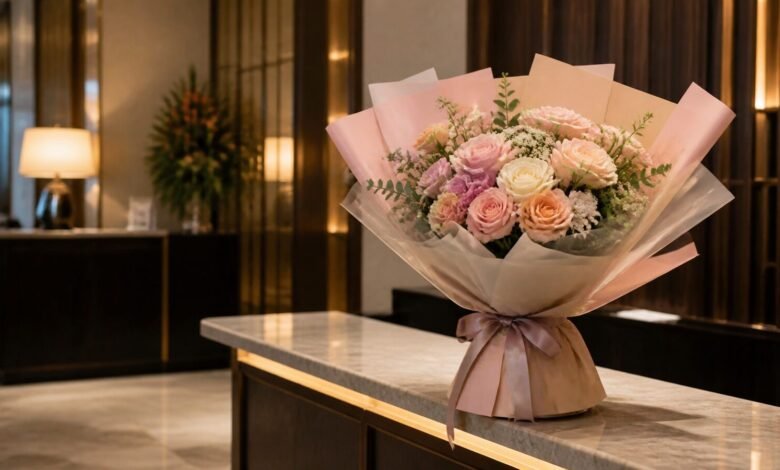
A hotel is a useful destination for a flower gift in China, but it is not a blank delivery address. The property may need to match the bouquet to a reservation, decide where outside deliveries are received, and hold the arrangement until the guest can collect it. For an overseas buyer, the practical task is to make that handoff easy without exposing more of the guest’s travel details than necessary.
The questions below are arranged around the moments when an order can go wrong: identifying the booking, checking the property’s receiving rule, and choosing a delivery time the hotel can actually manage. They apply whether the recipient is staying in Beijing, Shanghai, Guangzhou, Shenzhen, Chengdu, or another Chinese city.
Before ordering: make sure the booking can be found
Start with the hotel’s official name, not just the name shown in a map app. Chain properties can have similar names, multiple towers, or more than one branch in the same city. Compare the booking confirmation with the hotel’s own address and record the city, district, street, building, and branch details in the same form.
Ask the recipient for the name used on the reservation if the surprise allows it. A room number is helpful after check-in, but it is not a prerequisite for every order. Before arrival, the registered guest name and stay date may be the information reception can use to identify the bouquet.
Reception is a policy, not a doorway
“Deliver to the hotel” does not specify who receives the flowers. A front desk may accept a bouquet and call the guest, a concierge may hold it for collection, or a property may restrict outside couriers to a lobby entrance. Some hotels allow room delivery only after staff arrange access. Serviced apartments and hotel apartments may add a management office, security desk, or lift restriction.
Send one short question before relying on a surprise: Does this property accept outside flower deliveries, and where should a courier leave them for a registered guest? If the answer is unclear, treat the lobby or concierge desk as a possibility to confirm, not as a guaranteed destination. The property’s receiving rule matters more than a courier’s ability to reach the building entrance.
For a separate planning reference, see this guide to arranging hotel flower delivery in China. Use it to frame questions about addresses, room numbers, and hotel-apartment arrangements, then confirm the current rule with the property or delivery service handling the order.
Choose the right level of guest information
Give the guest’s name as booked and add the room number when it is confirmed. Include the arrival and departure dates when known, especially if the order is scheduled before check-in. An approximate arrival period can help reception decide whether to call the guest immediately or hold the flowers for a short time.
A Chinese mobile number may make coordination easier, but it is not the only possible contact. Depending on the property and provider, an international number, a clear guest name, or an agreed reception point may be enough to begin the handoff. Keep the buyer’s contact details separate so questions about substitutions or address changes reach the person who placed the order.
Do not put a passport number, booking code, room access code, or a full itinerary in a public card message. The delivery note should identify the person and the receiving point, not reveal the guest’s private travel record.
Match timing to the guest’s stay
A delivery for a guest who has not checked in should be planned differently from one for someone already in the room. If the bouquet arrives early, the hotel may need to store it; if it arrives after checkout, the recipient may never see it. Check the stay date and ask how long the property is willing to hold fresh flowers.
Same-day delivery can be available in some locations, but it depends on the destination, order time, arrangement, local capacity, hotel access, traffic, weather, and holiday demand. A morning or afternoon request can help with a check-in or dinner plan, but it remains a request rather than an exact-time promise.
Three common hotel scenarios
| Situation | Useful information | Question to confirm |
| Guest has not checked in | Booked name, stay date, expected arrival period | Will reception accept and hold the bouquet? |
| Guest is already in the hotel | Booked name, confirmed room number, reachable contact | Should the courier use the lobby, concierge, or another desk? |
| Serviced or hotel apartment | Building name, unit or management desk, access note | Does security permit outside flower deliveries? |
The table is a planning aid, not a promise that every property follows the same process. Hotels can change their receiving rules during events, security restrictions, or busy periods.
Write a note a busy desk can use
Guest: [name as booked]. Property: [official hotel name and full address]. Stay date: [date]. Room: [if confirmed]. Expected arrival: [period, if relevant]. Handover point: [only if confirmed]. Buyer contact: [reachable number or email].
Keep the message factual and short. If the guest changes hotels, arrives late, or the property has two entrances, update the provider before preparation begins. If a flower or colour is unavailable, ask how substitutions will be handled rather than assuming that the displayed photograph will be reproduced exactly.
The best hotel flower order is not the one with the longest instruction list. It is the one that gives the right property, enough information to identify the guest, a receiving point the hotel accepts, and a delivery period that fits the stay. Once those four pieces are confirmed, the bouquet can remain a thoughtful surprise instead of becoming a reception-desk puzzle.