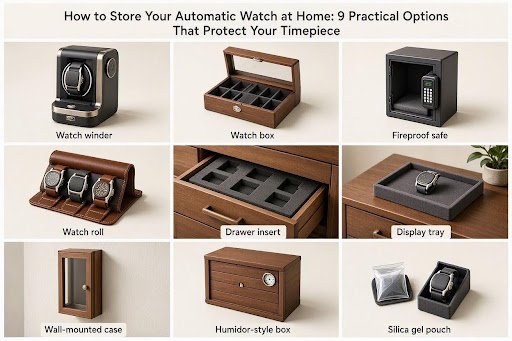
The best way to store an automatic watch at home is to keep it clean, dry, away from magnets, and either wound and running or fully stopped. A watch winder, a lined watch box, and a valet tray each solve a different part of that problem. Most collectors end up using two or three together.
Automatic watches reward good habits. A watch that spends months in a drawer can lose its date, run slow when you first wear it, and suffer scratches from other pieces. This guide covers nine storage options, who each one suits, and how to combine them.
1. A Watch Winder for Daily Wearers
Best for: anyone who rotates between several automatics and wants each one ready to wear.
A watch winder rotates your watch gently in a cradle, mimicking the wrist movement that powers the mainspring. Your watch stays running, so the time and date stay correct.
Winders make the most sense when you own watches with complications. A perpetual calendar or a moon phase takes real patience to reset, and a winder saves you that job. Even on a simple three-hander, you save a minute of setting every time you pick it up.
Check the winder’s turns per day (TPD) setting before you buy. Most automatics work well between 650 and 950 TPD, but movements vary, so read your watch’s manual. Quiet motors also matter if the winder will sit in a bedroom or study. If you want to compare current models, Aevitas UK’s Top Uk Watch Winders In range of recommendations breaks down what each one does well.
2. A Multi-Watch Winder Cabinet for Growing Collections
Best for: collectors with four or more automatics who wear them in rotation.
Once your collection outgrows a single winder, a multi-watch cabinet keeps everything in one place. Look for independent programming for each cradle, because a Rolex and a vintage Omega rarely need the same settings.
A cabinet also protects your watches from dust and gives you one spot to check on your whole collection. Set it on a stable surface away from windows, because direct sunlight fades dials and dries out lubricants over time.
3. A Lined Watch Box for Resting Pieces
Best for: watches you wear a few times a year.
Not every watch needs to run constantly. A dress watch you wear to weddings and formal dinners can rest in a well-made box between occasions. Choose a box with soft cushions, individual compartments, and a lid that closes without pressing on the crystals.
Avoid boxes with strong magnetic clasps. Modern watches resist small magnetic fields, but repeated exposure over years can affect the balance spring on some movements. A mechanical latch is the safer choice.
4. A Valet Tray for Your Daily Routine
Best for: the watch you take off every night.
Most watches don’t need a display case. They need a consistent landing spot. When you drop a watch on a dresser next to keys and loose change, you invite scratches on the case and crystal.
A valet tray solves that in seconds. You set the watch down, your wallet and keys go beside it, and everything stays in one place for the morning. If you want a tidy nightstand or entryway, browse our range of valet trays organise your man to find a tray that suits your space. Pick a soft-lined tray so the metal and glass never touch a hard surface.
Valet trays work best alongside a winder or a box. The tray handles the nightly routine, and the winder or box handles longer storage.
5. A Watch Roll for Travel and Short Trips
Best for: weekends away and business trips.
A padded watch roll keeps two or three watches separate and protected in a suitcase. Each slot holds the watch in place, so the pieces don’t knock against each other.
Bring a roll even when you only pack one watch. A single soft pouch protects far better than a jacket pocket or the bottom of a bag. Never leave your watches in checked luggage, and keep them with you in a carry-on instead.
6. A Small Home Safe for Security
Best for: valuable watches and complete collections.
Insurance companies often expect proper storage for high-value watches, and a safe also protects against theft. Choose a safe with a soft interior lining, or place your boxes inside it. Bare steel walls can scratch cases and bracelets.
Add a small desiccant pack to the safe if you live somewhere damp. Watch it, though, because desiccant packs lose their effectiveness and need replacing. A relative humidity of roughly 40 to 60 percent suits most watches.
7. Original Boxes and Papers for Resale Value
Best for: anyone who may sell or trade a watch later.
Original boxes rarely protect a watch as well as a dedicated storage solution, but they carry real value. Buyers pay more for a watch that comes complete with its box, warranty card, and manuals.
Store the boxes and papers together in a dry cupboard, separate from the watches themselves. Keep a photo of each warranty card on your phone as a backup. That habit costs you nothing and can save a lot of trouble if the paperwork ever goes missing.
8. Individual Pouches for Extra Scratch Protection
Best for: watches with polished bracelets and sapphire crystals that still pick up hairline marks.
A soft microfiber pouch adds a second layer of protection inside a drawer, safe, or box. It also keeps dust off the case and bracelet. Buy pouches in a soft, non-abrasive fabric and wash them occasionally so they don’t hold grit.
9. A Dedicated Display Case for Showpieces
Best for: collectors who want to see and enjoy their watches every day.
A glass-top display case lets you admire your collection without handling it. Choose one with UV-protective glass, especially if it sits in a bright room. Sunlight damages dials, lume, and leather straps faster than most people expect.
Display cases look great, but they don’t keep watches running. If you want your pieces to stay wound, pair the case with a winder for your everyday favourites.
How to Choose the Right Combination
Most collectors combine methods instead of choosing one. Here is a simple framework:
- Watches you wear weekly: a winder or a valet tray.
- Watches you wear monthly or less: a lined box or a pouch inside a safe.
- Travel pieces: a padded roll.
- Investment pieces: a safe, with the original box and papers stored separately.
Start with how often you wear each watch. Then match the storage to that habit. A watch that gets worn every week deserves quick access, while a rarely worn piece deserves maximum protection.
Common Storage Mistakes to Avoid
Even careful owners make a few avoidable errors:
- Storing watches near speakers, phones, or tablets. These items emit magnetic fields that can affect timekeeping.
- Leaving watches in a hot car or a steamy bathroom. Heat and moisture damage seals, lubricants, and leather.
- Stacking watches on top of each other. Crowns and lugs scratch crystals and cases.
- Winding a stopped watch too hard by hand. Wind gently, and stop when you feel resistance.
- Skipping servicing. Most mechanical movements benefit from a service every five to ten years, depending on the maker’s guidance.
What Happens When an Automatic Watch Stops?
An automatic watch stops when its power reserve runs out, which typically takes between 38 and 72 hours after it stops moving. Nothing breaks when this happens. You simply wind the crown a few turns or wear the watch for a while, set the time and date, and carry on.
The concern appears over long periods. If you leave a watch stopped for years, the lubricants inside the movement can thicken. Run your stored watches for a while every few months, and book a service if a long-idle piece behaves oddly. For a clear technical explanation of how self-winding movements work, this overview of the automatic watch covers the rotor, the mainspring, and the history behind the design.
Where to Put Your Watch Storage at Home
Location matters as much as the storage itself. Follow these guidelines:
- Place winders and boxes on a stable, level surface.
- Keep them away from direct sunlight and radiators.
- Avoid rooms with heavy humidity, such as bathrooms and kitchens.
- Keep them a safe distance from large electronics and speakers.
A bedroom dresser or a study shelf usually meets all four conditions.
Final Thoughts
Good watch storage doesn’t require a huge budget or a dedicated room. It requires a little thought about how often you wear each piece and where you keep it. A winder keeps your everyday watches ready, a valet tray keeps your nightly routine tidy, and a lined box or safe protects the pieces you save for special days.
Start with the watch you wear most, and build from there. If you want to see how winders, trays, and other accessories fit together, the Aevitas UK store is a good place to begin.
FAQs
Do automatic watches need a watch winder?
No. An automatic watch works perfectly well without a winder. A winder simply keeps the watch running while you’re not wearing it, so you don’t need to reset the time and date. It matters most for watches with complicated calendars.
How long can an automatic watch sit before it stops?
Most automatic watches keep running for about 38 to 72 hours without movement. The exact power reserve depends on the movement, so check your watch’s specifications or manual.
Is it bad to leave an automatic watch stopped for months?
Occasional stops cause no harm. Leaving a watch idle for years can let the lubricants thicken, which may affect accuracy. Run stored watches now and then, and service them at the interval the manufacturer recommends.
Can a watch winder damage my watch?
A properly set winder won’t damage your watch. Problems come from using the wrong TPD setting or running the winder non-stop when the watch doesn’t need it. Choose a winder with adjustable settings and match them to your movement.
What is the best way to store several watches at once?
A multi-watch winder cabinet suits watches you wear in rotation, and a lined box with individual compartments suits pieces you wear rarely. A safe adds security for valuable watches.
Should I keep my watch on a valet tray overnight?
Yes, a valet tray makes a good nightly resting spot. Choose one with a soft lining so the case and crystal never touch a hard surface, and keep it away from phones and other magnetic sources.
How humid should the room be for watch storage?
Aim for roughly 40 to 60 percent relative humidity. Very damp rooms encourage corrosion and mould on straps, while very dry air can dry out leather and some lubricants.