Toilet With Sink on Top: How It Works, Benefits, Drawbacks and Buying Guide
A simple guide to the space-saving toilet and sink combination for small bathrooms

Introduction
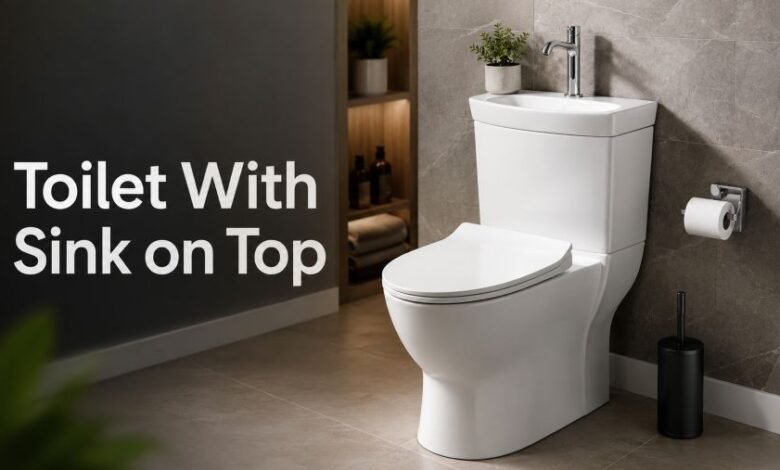
A toilet with sink on top is a clever bathroom fixture that combines a toilet and a small hand-washing basin in one compact unit. It is mainly designed for small bathrooms, cloakrooms, downstairs toilets, tiny homes and other places where there is not enough room for a separate sink.
Some models do more than save space. They can also use water from hand washing to help fill the toilet cistern for the next flush. This means the same water can serve two useful purposes before leaving the bathroom.
However, not every toilet and sink combination works in exactly the same way. Some are mainly designed to save space, while others are specifically designed to reuse hand-washing water.
This guide explains how these toilets work, their benefits, possible problems, installation needs and what you should check before buying one.
Toilet With Sink on Top Quick Facts
| Feature | Details |
|---|---|
| Common name | Toilet with sink on top |
| Other names | Toilet sink combo, 2-in-1 toilet and sink, integrated basin toilet |
| Main purpose | Saving bathroom space |
| Best for | Small bathrooms, cloakrooms and compact WCs |
| Water reuse | Available on some models |
| Sink size | Usually small and designed mainly for hand washing |
| Common flush system | Dual flush |
| Installation | Usually requires normal toilet and water connections |
| Main advantage | Toilet and basin use the same small area |
| Main drawback | Basin may be less comfortable than a normal sink |
What Is a Toilet With Sink on Top?
A toilet with sink on top is exactly what its name suggests.
Instead of having a separate wash basin somewhere else in the bathroom, a small basin is fitted above the toilet cistern or built into the same bathroom unit.
The design is especially useful when there is very little floor or wall space.
A traditional bathroom may need separate areas for:
- A toilet
- A wash basin
- Basin pipes
- Toilet pipes
- Storage or bathroom furniture
A combined toilet and sink can reduce the amount of room required.
This makes it one of the more practical ideas for people planning a very small WC.
How Does a Toilet With Sink on Top Work?
There are two main types.
1. Water-Reusing Toilet and Sink
Some models are designed so fresh water first comes through the small tap.
You wash your hands using this clean water.
Instead of immediately sending the used water down a normal sink drain, the system can direct it into the toilet cistern.
The process is simple:
- You flush the toilet.
- Fresh water flows through the basin tap.
- You wash your hands.
- The hand-washing water enters the cistern.
- The water can then help with the next toilet flush.
This gives the water two uses.
Fresh water → hand washing → toilet cistern → toilet flushing
You are not washing your hands using dirty water from the toilet.
That is an important difference.
2. Space-Saving Toilet and Basin Combination
Other models simply place the sink and toilet together.
They may have a basin above or beside the toilet, with the pipes and cistern hidden inside a cabinet.
These products are mainly designed to save space.
The basin water may still go through a normal waste pipe rather than into the cistern.
Therefore, you should not assume that every toilet with a sink on top automatically recycles water.
Why Are Toilets With Sinks on Top Becoming Popular?
Modern homes often need better ways to use small spaces.
This is especially true in:
- Apartments
- Small houses
- Tiny homes
- Downstairs toilets
- Guest toilets
- En-suites
- Converted rooms
A full-size sink can take up valuable space in these areas.
Putting the hand basin above the toilet allows both fixtures to fit into a much smaller area.
People interested in practical home design and renovation ideas may also find compact bathroom fixtures useful when trying to make better use of limited space.
Main Benefits of a Toilet With Sink on Top
Saves Bathroom Space
Space saving is usually the biggest advantage.
You do not need to find another wall or floor area for a separate hand basin.
This can make it possible to add hand-washing facilities to a WC that would otherwise feel too small.
Can Reduce Water Waste
Certain models reuse hand-washing water for toilet flushing.
Normally, water from a sink goes directly into the drain after you wash your hands.
In a reuse system, some of that water can instead enter the toilet cistern and be used again.
This may reduce the amount of fresh water needed for flushing.
The exact saving will depend on the toilet design and how frequently it is used.
Useful for Small Cloakrooms
A downstairs cloakroom is one of the best places for this type of toilet.
These rooms are often extremely narrow.
Installing a toilet and a separate basin can make them feel crowded.
A combined unit can provide both functions without using two separate areas.
Simple and Modern Appearance
Many newer models have a clean and compact appearance.
Some include cabinets that hide:
- Pipes
- Cisterns
- Water connections
This can help make a small bathroom look less cluttered.
Encourages Hand Washing
A sink positioned directly beside or above the toilet makes hand washing immediately available after using the WC.
This can be particularly useful in a tiny room where fitting a normal sink would otherwise be difficult.
Is the Water From the Sink Clean?
Yes, the water coming from the tap should be clean fresh supply water when the system is correctly designed and installed.
The water does not normally come from the toilet bowl.
The order is important.
First, clean water reaches the tap.
You then use it to wash your hands.
Only after hand washing does the water become used water.
On certain systems, it then enters the toilet cistern and can later be used for flushing.
So you are not washing your hands with toilet water.
Does a Toilet With Sink on Top Save Water?
It can.
However, this depends on the model.
A normal basin sends used hand-washing water into the drain.
A water-reusing toilet-sink system can redirect that water into the cistern.
That means less new water may be required for a future flush.
A dual-flush toilet can provide another way to reduce water use because users can select a smaller flush when a full flush is not required.
Do not assume that every 2-in-1 toilet saves the same amount of water.
Water use depends on:
- Cistern size
- Flush volume
- Basin use
- Number of users
- Toilet design
- Whether the sink water actually enters the cistern
Check the product specifications before buying.
Is a Toilet With Sink on Top Hygienic?
A properly installed unit can provide a normal place to wash your hands.
Good hand washing still requires:
- Clean running water
- Soap
- Proper rinsing
- Hand drying
The small size of the sink does not change these basic hygiene steps.
It is also important to clean the basin regularly because it sits close to the toilet.
Keeping the toilet lid closed when flushing, where practical, and regularly cleaning bathroom surfaces can also help keep the area tidy.
Does It Use Hot or Cold Water?
This depends on the model.
Some integrated toilet-top basins may use cold water only.
Other designs can support a mixer tap or connections for both hot and cold water.
Check this before buying if warm water is important to you.
The plumbing requirements can vary considerably between models.
Is a Toilet With Sink on Top Comfortable to Use?
For many people, yes.
However, comfort depends on the design.
A sink positioned directly over the cistern may require you to lean slightly over the toilet when washing your hands.
That may be perfectly acceptable in a small guest toilet but less comfortable for everyday use.
A furniture-style combination with the sink positioned slightly to one side may provide easier access.
Think about who will use the bathroom before choosing a design.
Is It Good for Elderly or Disabled Users?
Not automatically.
A compact toilet-top basin may be harder to reach for someone with reduced movement, balance problems or wheelchair-access requirements.
The toilet itself may also have different height and clearance measurements from an accessible toilet.
If you are designing an accessible bathroom, check:
- Basin height
- Toilet height
- Space beside the toilet
- Wheelchair clearance
- Grab-rail space
- Local accessibility requirements
Do not choose a model simply because it saves space.
Accessibility should come first when required.
Possible Drawbacks
A toilet with sink on top has many advantages, but there are also limitations.
Small Basin
The basin is normally designed mainly for washing hands.
It may not be suitable for:
- Washing your face
- Washing your hair
- Shaving comfortably
- Cleaning larger items
- Filling large containers
For a main family bathroom, a normal basin is usually more practical.
Less Comfortable Position
Some users may find it uncomfortable to lean over the toilet to reach the sink.
This depends strongly on the design.
More Complicated Repairs
Because several bathroom parts are combined into one unit, repairs may sometimes require removing the basin or opening a cabinet.
A standard toilet and separate basin can sometimes be easier to access.
Special Replacement Parts
Certain integrated models may use special:
- Cistern lids
- Basin tops
- Taps
- Valves
- Connectors
These parts may be harder to replace than standard bathroom fittings.
Check whether replacement parts are easily available before buying.
Not Every Model Reuses Water
This is one of the most common misunderstandings.
A toilet and sink combination does not automatically mean water recycling.
Some units simply place both bathroom fixtures together to save space.
Read the product description carefully.
What Size Bathroom Is It Best For?
There is no single required room size.
These products are mainly useful where fitting a separate toilet and basin would be difficult.
They can work well in:
- Narrow cloakrooms
- Under-stairs toilets
- Small en-suites
- Studio apartments
- Tiny homes
- Small office WCs
- Guest bathrooms
Always measure the room before ordering.
Remember to leave enough space in front of the toilet for comfortable use.
What Should You Measure Before Buying?
Measure:
- Total room width
- Total room length
- Toilet width
- Toilet depth
- Toilet height
- Basin width
- Basin projection
- Waste pipe location
- Water pipe location
- Door opening space
Do not only check whether the toilet physically fits.
You must also be able to sit down, stand up and wash your hands comfortably.
What Should You Check Before Buying?
Toilet Dimensions
Measure the available space carefully.
A few centimetres can make a big difference inside a small bathroom.
Flush System
A dual-flush system gives you a choice between smaller and larger flushes.
Water-Reuse Feature
If water saving is important, confirm that the basin water actually enters the cistern.
Do not rely only on words such as “2-in-1.”
Tap Included or Not
Some products include a tap.
Others require you to purchase one separately.
Basin Waste
Check whether the waste fitting comes with the unit.
Toilet Seat
Some models include a standard seat, while others offer a soft-close seat.
Plumbing Compatibility
Check whether the waste outlet and water inlet match your existing bathroom plumbing.
Cistern Access
Find out how the cistern can be reached if something needs repairing.
Easy maintenance can save problems later.
Replacement Parts
Choose a product from a supplier that can provide replacement parts if possible.
Can You Install One Yourself?
Replacing a toilet can involve:
- Water connections
- Waste pipes
- Cistern fittings
- Seals
- Valves
- Drainage connections
Someone with strong plumbing experience may be able to complete some installations.
For most homeowners, using a qualified plumber is the safer choice.
Poor installation can cause:
- Water leaks
- Bad smells
- Weak flushing
- Drainage problems
- Damage to floors or walls
Professional installation is especially important if the drainage layout needs to be changed.
Can You Add a Sink to an Existing Toilet?
There are toilet-top sink conversion products in some markets, but compatibility varies.
You cannot simply place any normal basin on top of any toilet.
The cistern must support the design, and the plumbing needs to work correctly.
Check:
- Cistern dimensions
- Water inlet
- Overflow system
- Basin drainage
- Flush mechanism
- Product compatibility
In many cases, replacing the complete toilet with a purpose-built combination may be easier.
Toilet With Sink on Top vs Separate Toilet and Sink
| Feature | Sink on Toilet | Separate Sink |
|---|---|---|
| Space needed | Low | Higher |
| Good for small WC | Excellent | Depends on room |
| Basin size | Usually small | Many sizes available |
| Water reuse | Possible on some models | Usually separate |
| Accessibility | Depends on design | Easier to customise |
| Maintenance | Can be more complex | Usually straightforward |
| Main bathroom use | Possible but limited | Usually better |
| Cloakroom use | Very practical | Requires more space |
Who Should Consider One?
A toilet with sink on top may be a good choice if:
- Your bathroom is extremely small.
- You are building a compact downstairs toilet.
- You cannot fit a normal hand basin.
- You want to make better use of limited space.
- You want a compact all-in-one bathroom unit.
- You are interested in reducing water use with a compatible reuse model.
Who May Prefer a Separate Basin?
A normal toilet and sink may be better if:
- You have plenty of bathroom space.
- You want a large basin.
- Several people use the bathroom every day.
- Accessibility is important.
- You want more storage.
- You regularly use the basin for more than hand washing.
Are Toilet and Sink Combos Expensive?
Prices vary greatly.
The final cost can depend on:
- Brand
- Materials
- Basin design
- Cabinet included
- Tap included
- Water-reuse system
- Toilet type
- Installation work
A simple integrated toilet may cost less than a large bathroom furniture combination.
However, installation costs may increase if plumbing needs to be moved.
It is better to compare the complete cost rather than looking only at the toilet price.
Are They Difficult to Clean?
Usually not, but they may require slightly different cleaning habits.
Because the basin is close to the toilet, clean both surfaces regularly.
Pay attention to:
- Basin
- Tap
- Toilet lid
- Cistern area
- Toilet seat
- Handle or flush button
A smooth ceramic design can generally be easier to wipe clean than a unit with many small gaps and joins.
Frequently Asked Questions
What is a toilet with a sink on top called?
It can be called a toilet and sink combo, toilet sink combination, integrated hand-basin toilet, toilet-top sink or 2-in-1 toilet and basin.
How does a toilet with a sink on top work?
On water-reuse models, fresh water first comes through the tap for hand washing. The used water can then enter the cistern and help provide water for the next toilet flush.
Other models simply combine the toilet and basin to save space.
Does the sink use toilet water?
No. A properly designed system supplies clean water to the sink first. The water may enter the toilet cistern only after it has been used for hand washing.
Does a toilet sink combo save water?
Some models can save water by reusing hand-washing water for flushing. The amount saved depends on the product and how it is used.
Are toilets with sinks on top good?
They can be very useful in small bathrooms and cloakrooms. However, their small basin and unusual position may not suit every user.
Can I put one in a downstairs toilet?
Yes. A small downstairs WC is one of the most common places where a toilet and sink combination can be useful.
Do all toilet sink combos recycle water?
No. Some are designed mainly to save space. Check the specifications if you specifically want a water-reuse system.
Is the basin large enough?
It is normally large enough for hand washing but may be too small for normal bathroom tasks such as washing your face or shaving.
Final Thoughts
A toilet with sink on top can be a smart solution when bathroom space is limited.
It combines two important bathroom fixtures within a small area and can make it possible to add proper hand-washing facilities to a very compact WC.
Certain models offer another advantage by using hand-washing water for a later toilet flush. However, water reuse is not included with every toilet-sink combination, so buyers should always check the exact product specifications.
For a cloakroom, downstairs toilet, tiny home or compact en-suite, this type of fixture can make excellent use of limited space.
Before buying, measure the room carefully, check your plumbing, think about accessibility and make sure the basin will be comfortable for the people who will use it.