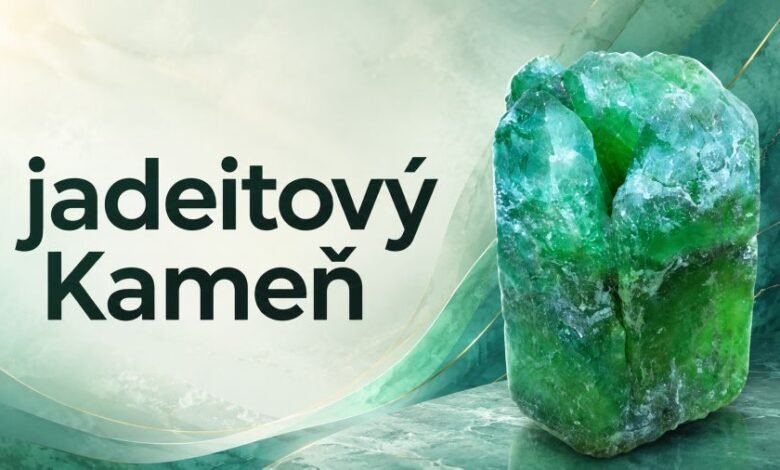
Jadeitový kameň is the Slovak term for jadeite stone, one of the natural materials commonly known as jade. It is valued for its attractive colour, smooth surface, exceptional toughness, and long cultural history.
People in Slovakia often search for jadeitový kameň when looking for jewellery, decorative stones, crystal collections, gifts, or information about jadeite properties. However, buyers should understand that not every green stone sold as jade is genuine jadeite.
This guide explains what jadeitový kameň is, how to recognise it, where it comes from, what affects its price, and how to buy it safely.
Jadeitový Kameň at a Glance
| Feature | Details |
|---|---|
| Slovak name | Jadeitový kameň |
| English name | Jadeite stone |
| Mineral family | Pyroxene |
| Chemical formula | NaAlSi₂O₆ |
| Crystal system | Monoclinic |
| Mohs hardness | Around 6.5 to 7 |
| Common colours | Green, white, lavender, yellow, orange and black |
| Main uses | Jewellery, carvings, ornaments and collections |
| Most valued variety | Fine translucent emerald-green jadeite |
| Safe cleaning method | Warm water, mild soap and a soft cloth |
What Is Jadeitový Kameň?
Jadeitový kameň is a natural mineral called jadeite. It is one of the principal materials recognised in the jewellery trade under the general name jade.
Jadeite is formed under high pressure and relatively low temperatures deep within particular geological environments. Its crystals often grow together in a tightly interlocking structure.
This structure makes the material extremely tough. Although jadeite can still be scratched, its resistance to breaking has made it suitable for bangles, pendants, beads, carvings and ceremonial objects.
Readers interested in decorative objects and valuable materials may also enjoy learning about jewellery specialist Hettie Jago, whose professional work includes antique and gemstone pieces.
Jadeite and Nephrite Are Not the Same
The word jade is commonly used for two different materials:
- Jadeite
- Nephrite
Jadeite belongs to the pyroxene mineral group. Nephrite is an amphibole material containing closely interwoven mineral fibres.
Both can be beautiful and durable, but jadeite is generally rarer. Fine jadeite with strong colour and good transparency can also command much higher prices.
A seller should clearly state whether a product is jadeite or nephrite. A label that only says “jade” does not provide enough information about the material.
Other green stones, including serpentine, quartz, aventurine and dyed chalcedony, may also be marketed using jade-related trade names. These materials are not necessarily jadeite.
What Colours Can Jadeitový Kameň Have?
Green is the colour most strongly associated with jadeite, but jadeitový kameň occurs in several shades.
Common colours include:
- Emerald green
- Apple green
- Bluish green
- Pale green
- White
- Grey
- Lavender
- Yellow
- Orange
- Brown
- Very dark green or almost black
Pure jadeite may appear white or nearly colourless. Trace elements within the stone create its other colours.
Chromium is responsible for some of the finest vivid green colours. Iron can produce green, yellow or brown tones, while other trace elements may contribute to lavender shades.
Colour can appear evenly across a stone or in patches, veins and cloudy areas. Natural variation is common.
What Is Imperial Jade?
Imperial jade is a trade description used for the finest vivid green jadeite.
A high-quality example usually has:
- A rich emerald-green colour
- Good translucency
- Fine texture
- Even colour distribution
- No obvious brown or grey undertone
- Limited visible fractures
The term “Imperial jade” should not be treated as proof of authenticity. Sellers may use attractive marketing words without offering independent evidence.
For an expensive purchase, buyers should request a report from a recognised gemological laboratory.
Where Does Jadeitový Kameň Come From?
Jadeite deposits are rare because the mineral requires specific geological conditions to form.
Important jadeite occurrences have been identified in:
- Myanmar
- Guatemala
- Japan
- Russia
- The United States
- Alpine regions of Europe
Myanmar has historically been the most important commercial source of fine gem-quality jadeite. Guatemala is also well known for jadeite connected with ancient Mesoamerican cultures.
The source can add historical interest, but origin alone does not determine quality. Colour, transparency, texture, treatment and workmanship remain important.
Why Is Jadeite So Tough?
Jadeite has a hardness of approximately 6.5 to 7 on the Mohs scale.
Hardness measures resistance to scratching. Toughness refers to resistance to breaking, cracking or chipping. These are different properties.
The tightly interlocking structure of jadeite gives it exceptional toughness. This is one reason ancient communities used jade materials for tools, weapons and carved objects.
Modern artists also work with materials whose physical qualities affect the final object. Forma Magazine explores creative practice through profiles such as contemporary artist Martha Rosler and visual artist Thomas Dozol.
Jadeitový Kameň Meaning and Symbolism
Jade has carried symbolic importance in several cultures for thousands of years.
It has traditionally been associated with:
- Good fortune
- Wisdom
- Protection
- Harmony
- Purity
- Prosperity
- Long life
- Peace
In Chinese culture, jade has been connected with status, virtue, beauty and spiritual meaning. Jadeite was also important to Mesoamerican civilisations, where it was used for ornaments, ritual objects and symbols of rank.
Today, some people carry jadeitový kameň as a personal symbol or wear it as meaningful jewellery.
These cultural and spiritual associations should be separated from medical claims. There is no reliable evidence that wearing jadeite can diagnose, prevent or cure illness.
Jadeitový Kameň Uses
Jadeite is used for both practical and decorative purposes.
Jewellery
Common jadeite jewellery includes:
- Bangles
- Rings
- Pendants
- Earrings
- Necklaces
- Beads
- Brooches
Bangles are especially popular because jadeite can be shaped and polished into a smooth circular form.
Decorative Carvings
Jadeite may be carved into:
- Animals
- Flowers
- Religious symbols
- Small figures
- Bowls
- Seals
- Amulets
The quality of carving can strongly affect the value of a finished piece.
Collecting
Natural jadeite specimens are also collected for their mineral structure, colour and geological importance.
People developing knowledge of minerals, design and cultural objects can explore additional educational guides covering creative and practical subjects.
What Determines the Price of Jadeitový Kameň?
There is no single fixed price for jadeite. Two stones of similar size can have very different values.
According to the Gemological Institute of America’s jade quality guidance, the three most important jadeite quality factors are colour, transparency and texture.
Colour
Colour usually has the greatest impact on price.
A valuable green stone normally has:
- Strong colour
- Even distribution
- Good saturation
- Little grey or brown colouring
Lavender jadeite can also be valuable when the colour is attractive and the material has good transparency.
Transparency
Jadeite ranges from opaque to nearly transparent.
Fine translucent material allows light to enter the stone and creates a soft glowing appearance. This can make it more desirable than cloudy or fully opaque material.
Texture
Fine-textured jadeite generally appears smoother and more attractive.
Coarse grains, surface pits, cloudy patches or an uneven structure may reduce its value.
Size and Shape
Large pieces of high-quality jadeite are rare. Size can therefore increase value when colour, texture and transparency are also good.
A large low-quality stone is not automatically more valuable than a small fine-quality piece.
Craftsmanship
The skill used to cut, polish or carve jadeite affects the finished value.
Good workmanship may improve the stone’s natural colour pattern, hide weaker areas and create a balanced design.
Cracks and Damage
Visible cracks, deep scratches and repaired sections can reduce durability and market value.
Buyers should inspect bangles carefully because internal fractures may weaken them.
Treatment
Natural jadeite without significant chemical enhancement generally has greater collector and jewellery value than heavily treated material of similar appearance.
Type A, Type B and Type C Jadeite
Jadeite sellers commonly use letter-based treatment descriptions.
Type A Jadeite
Type A normally refers to natural jadeite that has not received significant chemical treatment. Traditional surface waxing may be accepted within this description.
Type A does not automatically mean top quality. A natural untreated stone can still have weak colour, poor transparency or visible cracks.
Type B Jadeite
Type B jadeite has usually been chemically bleached to remove stains or unwanted material. It is then impregnated with polymer or resin.
This process can improve appearance, but it changes the material and may affect long-term stability.
Type C Jadeite
Type C jadeite has been artificially dyed to improve or change its colour.
Type B+C Jadeite
This material has undergone both bleaching and polymer impregnation as well as artificial colouring.
Treatment must be disclosed clearly because it can have a major effect on price.
How to Recognise Real Jadeitový Kameň
It is difficult to identify jadeite reliably at home.
Some natural jadeite may show:
- A smooth polish
- A dense feel
- Fine internal texture
- Uneven natural colour
- A cool surface before warming in the hand
However, these signs cannot prove that a stone is genuine. Glass, dyed stones, composites and treated jadeite can imitate natural material.
Avoid destructive home tests such as:
- Scratching with a knife
- Heating with a flame
- Hitting the stone
- Using strong chemicals
- Dropping it to test toughness
These methods can damage genuine jadeite and still produce an unreliable result.
Professional laboratories may use microscopy, spectroscopy, refractive index testing and other gemological methods to identify the material and detect treatments.
Buying Jadeitový Kameň in Slovakia
People searching for jadeitový kameň in Slovakia may find it through jewellery shops, mineral stores, crystal retailers, antique dealers, craft markets and online sellers.
Before buying, check whether the product description states:
- Jadeite or nephrite
- Natural or synthetic material
- Treatment information
- Stone dimensions
- Product weight
- Country of origin, when documented
- Return conditions
- Laboratory report details
- Metal type used in jewellery
Listings that use only phrases such as “green jade stone,” “healing jade,” or “natural crystal” may not provide enough information.
For lower-priced decorative products, a detailed report may not always be practical. For an expensive bangle, ring or collector piece, independent certification is much more important.
Forma Magazine’s wider collection of consumer and lifestyle articles can also help readers make more informed choices about products and materials.
Questions to Ask a Seller
Ask these questions before purchasing jadeite:
- Is the stone jadeite or nephrite?
- Has it been dyed?
- Has it been bleached or polymer-filled?
- Is it Type A, Type B or Type C?
- Is a laboratory report included?
- Can the report number be verified?
- Does the stone contain cracks or repairs?
- Is the colour natural?
- What is the return policy?
- Will the treatment information appear on the invoice?
A trustworthy seller should answer clearly and avoid making unsupported claims.
Common Jade Imitations
Several materials may be sold using names that sound similar to jade.
Common examples include:
- Serpentine
- Aventurine quartz
- Dyed quartz
- Dyed chalcedony
- Glass
- Plastic
- Soapstone
- Calcite
- Composite material
Names such as “new jade” or geographical jade trade names do not always mean genuine jadeite.
Buyers should focus on the mineral identity rather than the marketing name.
How to Clean Jadeitový Kameň
The safest general cleaning method is simple.
- Place the item in lukewarm water.
- Add a small amount of mild soap.
- Clean it gently with a soft cloth or soft brush.
- Rinse it with clean water.
- Dry it with a lint-free cloth.
The GIA recommends warm soapy water as a safe choice because jade may have received treatments such as dyeing, bleaching, impregnation, coating or heat. Its full jade care and cleaning guide also explains the material’s durability and stability.
Avoid:
- Bleach
- Acids
- Abrasive cleaners
- Hard brushes
- Extreme heat
- Strong impacts
- Prolonged chemical exposure
When the treatment status is unknown, do not use ultrasonic or steam cleaning.
How to Store Jadeite Jewellery
Store jadeite separately from harder gemstones.
A diamond, sapphire or other hard material can scratch its polished surface. Use a soft pouch or a lined jewellery box.
Do not leave a jadeite bangle where it can fall onto tiles or concrete. Jadeite is tough, but a strong impact can still create a fracture.
Remove jadeite jewellery before heavy cleaning, construction work, intense exercise or activities involving hard surfaces.
Does Jadeitový Kameň Change Colour?
Natural jadeite does not normally change colour dramatically during ordinary wear.
Its appearance may seem different because of:
- Lighting conditions
- Surface oil
- Dirt
- Wax
- Photography filters
- Background colour
- Deterioration of treatment
Dyed or polymer-treated pieces may fade, discolour or lose transparency over time.
A sudden colour change should be checked by a qualified jeweller or gemologist.
Is Jadeitový Kameň Expensive?
Jadeite exists across a wide price range.
Small opaque beads or low-grade carvings may be affordable. Fine translucent jadeite with vivid green colour can be extremely valuable.
Price depends on the whole object rather than colour alone. A bright green piece may be inexpensive when it is dyed, heavily treated or made from another mineral.
Never assume that a high price proves authenticity.
Frequently Asked Questions
What does jadeitový kameň mean in English?
It means jadeite stone.
Is jadeitový kameň real jade?
Yes. Jadeite is one of the main natural materials recognised as jade.
Is jadeite always green?
No. It can also be white, lavender, yellow, orange, brown, grey or nearly black.
Is jadeite harder than nephrite?
Jadeite is slightly harder on the Mohs scale, although both materials are known for exceptional toughness.
What is the best jadeite colour?
Vivid and evenly distributed emerald green is generally the most prized colour, especially when the stone is translucent.
Can jadeitový kameň be worn every day?
It can be worn regularly, but it should be protected from scratches, strong impacts, chemicals and extreme heat.
How can I tell whether jadeite is treated?
Reliable treatment identification normally requires professional gemological testing.
Is jadeitový kameň a healing stone?
It has traditional symbolic meanings, but it is not a scientifically proven medical treatment.
Conclusion
Jadeitový kameň is a beautiful and historically important material used in jewellery, carvings and decorative objects. Its colours range far beyond green, while its tightly interlocking structure gives it unusual toughness.
The most important factors affecting jadeite value are colour, transparency, texture, treatment and craftsmanship. Buyers in Slovakia should check whether a seller is offering genuine jadeite, nephrite or another green stone.
Clear treatment disclosure and independent laboratory testing are especially important for expensive pieces. Careful research can help buyers choose a jadeitový kameň that is attractive, durable and honestly represented.