Robin Zeng Biography: Inspiring Rise of CATL’s Battery King
Last Updated: June 23, 2026

How a technically trained entrepreneur built the world’s leading electric-vehicle battery company
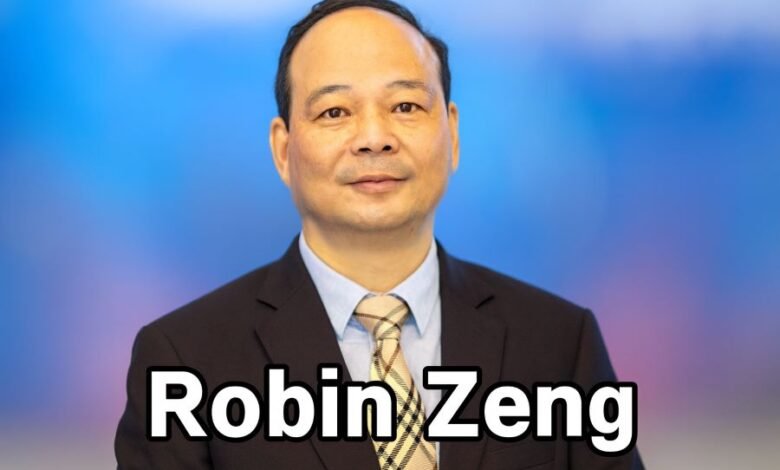
Robin Zeng is a Chinese battery engineer, entrepreneur and business leader best known as the founder, chairman and chief executive of Contemporary Amperex Technology Co. Limited, commonly known as CATL.
Born in Ningde, Fujian Province, Zeng moved from engineering and consumer-electronics batteries into electric-vehicle technology. His decisions helped turn CATL into a major supplier of EV batteries and energy-storage systems.
Robin Zeng is famous for founding CATL and helping make it a global leader in battery technology.
Robin Zeng Quick Bio
| Field | Details |
|---|---|
| Full Name | Robin Zeng Yuqun |
| Chinese Name | 曾毓群 |
| Common Name | Robin Zeng |
| Birth Year | 1968 |
| Birthplace | Ningde, Fujian Province, China |
| Nationality | Chinese |
| Profession | Entrepreneur, battery engineer and business executive |
| Famous For | Founder of CATL |
| Current Role | Chairman and CEO or general manager of CATL |
| Undergraduate Education | Marine Engineering, Shanghai Jiao Tong University |
| Master’s Education | Applied Physics and electronic-information engineering studies, South China University of Technology |
| Doctoral Education | PhD in Physics, Institute of Physics, Chinese Academy of Sciences |
| First Major Battery Company | Amperex Technology Limited |
| CATL Founded | 2011 |
| Main Industries | EV batteries, energy storage and clean-energy technology |
| Estimated Wealth | US$53.2 billion on the Forbes 2026 annual list |
Who Is Robin Zeng?
Robin Zeng, also known as Zeng Yuqun, is one of the most important executives in the modern battery industry.
He founded CATL in Ningde in 2011. The company develops electric-vehicle batteries, battery-management systems and energy-storage products.
Zeng’s importance comes from the scale of CATL’s operations. The company supplies battery technology for electric cars, commercial vehicles and large energy-storage projects.
His career combines scientific education, industrial manufacturing and long-term business planning.
Early Life in Ningde
Robin Zeng was born in 1968 in Ningde, a coastal city in China’s Fujian Province.
Publicly verified information about his childhood is limited. However, his later career remained closely connected to Ningde, where CATL established its headquarters and one of its most important manufacturing bases.
His journey from a regional Chinese city to global industrial leadership has become an important part of his public biography.
Like other major Chinese entrepreneurs, including Zhong Shanshan, Zeng built his fortune by identifying a fast-growing market and developing a company around it.
Education and Scientific Training
Zeng studied marine engineering at Shanghai Jiao Tong University and completed his bachelor’s degree in 1989.
He later continued his education while developing his business career. South China University of Technology identifies him as a former master’s student in applied physics and electronic-information engineering.
He also earned a PhD in physics from the Institute of Physics at the Chinese Academy of Sciences. His doctoral work is commonly connected with condensed-matter physics.
This combination of engineering, physics and manufacturing knowledge later shaped CATL’s research-driven business model.
Early Career in Engineering
After university, Zeng briefly worked for a state-owned shipbuilding organisation in Fujian.
He later moved to Guangdong and entered the electronics-manufacturing industry. This brought him closer to the rapidly expanding market for rechargeable batteries used in portable electronic products.
During this period, he developed experience in product engineering, production management and international manufacturing.
These early roles provided the technical and commercial knowledge he later used to establish his own battery business.
Establishing Amperex Technology Limited
In 1999, Robin Zeng became involved in establishing Amperex Technology Limited, better known as ATL.
ATL specialised in lithium-polymer batteries for mobile phones, music players and other consumer-electronics products. The company grew as global demand for smaller and more powerful rechargeable batteries increased.
Zeng served in senior positions at ATL, including president, chief executive and director.
Japanese electronics company TDK acquired ATL in 2005. Zeng remained involved in its management and later held senior positions within TDK.
This period gave him experience in international management, quality control and large-scale battery production.
Why Robin Zeng Founded CATL
During the late 2000s, the electric-vehicle industry began creating a much larger market for rechargeable batteries.
Zeng recognised that batteries for cars would require different safety systems, production methods and performance standards from batteries made for phones or portable devices.
In December 2011, a founding team led by Zeng established Contemporary Amperex Technology Co. Limited in Ningde.
CATL focused on electric-vehicle batteries and energy-storage systems. Its early relationship with automobile manufacturers helped the business build technical credibility.
Like Sunil Mittal, Zeng expanded by recognising a major technological shift before the market had fully matured.
CATL’s Rise in the Electric-Vehicle Industry
CATL grew rapidly as demand for electric cars increased in China, Europe and other international markets.
The company invested heavily in battery chemistry, manufacturing systems, thermal management, charging speed and battery safety.
Its products include lithium iron phosphate batteries, nickel-based battery systems, sodium-ion technology, battery-swapping solutions and stationary storage products.
CATL eventually became a major supplier to automobile groups operating in China and international markets.
The company reports that it ranked first globally for EV battery applications for nine consecutive years through 2025. It also ranked first in battery-energy-storage-system deliveries for five consecutive years.
Shenzhen and Hong Kong Listings
CATL completed its original public listing on the Shenzhen Stock Exchange in June 2018.
This is an important correction because some older Robin Zeng profiles incorrectly state that the company went public in 2017.
On 20 May 2025, CATL also began trading on the Hong Kong Stock Exchange.
The Hong Kong offering supported CATL’s international plans, including overseas manufacturing, research and expansion in Europe.
Robin Zeng’s Role at CATL
Robin Zeng founded the CATL group in December 2011.
He has served as chairman of the company’s board since June 2017. He became general manager in August 2022, a position broadly equivalent to chief executive.
His responsibilities include CATL’s overall strategy, technical direction and international development.
His position as both chairman and operational leader gives him significant influence over the company’s long-term decisions.
Leadership and Business Strategy
Zeng is known for combining scientific thinking with strict industrial execution.
Rather than presenting CATL as only a manufacturing company, he has supported major investment in research laboratories, battery materials and production technology.
His leadership also focuses on long-term partnerships with vehicle manufacturers and energy companies.
His technically focused founder profile will also interest readers who follow technology entrepreneurs such as Joe Lonsdale.
Battery Innovation Under Robin Zeng
CATL has worked on several battery technologies designed to improve range, safety, charging speed and affordability.
The company has expanded its lithium iron phosphate products because they can provide strong safety, long operating life and lower material costs.
It has also developed sodium-ion batteries, fast-charging battery systems and cell-to-pack designs that reduce unnecessary structural components.
Zeng has argued that battery improvement depends on more than a single chemistry. Materials, pack design, software, manufacturing and recycling must work together.
Expansion Beyond EV Batteries
Robin Zeng’s plans extend beyond batteries used in passenger cars.
CATL is expanding into stationary energy storage, zero-carbon electricity systems, commercial-vehicle batteries and integrated electric-vehicle platforms.
Zeng has described renewable power grids and large energy-storage systems as major future opportunities.
These systems can store electricity generated by solar and wind installations and provide power when renewable output falls.
This broader strategy could gradually transform CATL from a battery supplier into a more complete clean-energy technology company.
International Operations
CATL has expanded production and partnerships outside China, particularly in Europe.
The company has developed manufacturing operations in Germany and Hungary and has pursued additional partnerships involving European vehicle production.
International expansion also creates challenges. Battery companies must manage different regulations, supply chains, trade policies and national-security concerns.
Zeng has continued to argue for international cooperation in battery research, electric mobility and clean-energy infrastructure.
His focus on industrial scale and public impact can be compared with business leaders such as Adar Poonawalla, although they operate in very different industries.
Robin Zeng Net Worth
Robin Zeng’s wealth primarily comes from his ownership interest in CATL.
The Forbes profile of Robin Zeng identifies CATL as the main source of his fortune.
Forbes estimated his wealth at approximately US$53.2 billion for its 2026 annual billionaires list. That valuation used stock prices and exchange rates from 1 March 2026.
His actual wealth changes as CATL’s share price, currency values and ownership calculations move.
The founder-controlled business model can also be seen in profiles of entrepreneurs such as Henry Moser, although their companies and markets are different.
Awards and Recognition
Robin Zeng received the NAATBatt Lifetime Achievement Award in 2020 for his contribution to lithium-ion battery manufacturing.
He was included in the TIME 100 list of influential people in 2023.
The Nobel Sustainability Trust also presented him with its Outstanding Contribution in Sustainability Award in 2023.
These honours recognised his work in battery production, electric transportation and the wider transition towards cleaner energy.
Educational and Philanthropic Contributions
Zeng has maintained links with Shanghai Jiao Tong University.
He supported the establishment of the Yuqun Zeng Education Foundation and became involved with the university’s board of trustees.
He also serves as an honorary dean connected with the university’s Global Institute of Future Technology.
The institute focuses on sustainable energy, health technology, interdisciplinary research and cooperation between universities and industry.
Challenges Facing Robin Zeng and CATL
CATL operates in an industry affected by intense competition, changing raw-material prices and trade restrictions.
The company competes with major battery manufacturers from China, South Korea and Japan.
International political debate has also affected CATL’s overseas partnerships, particularly projects involving technology licensing or sensitive infrastructure.
Zeng must balance global expansion with growing pressure for regional battery supply chains in Europe and North America.
Current Status in 2026
As of June 2026, Robin Zeng remains the founder, chairman and chief executive or general manager of CATL.
CATL continues to lead global EV battery applications while expanding its energy-storage, sodium-ion, fast-charging and zero-carbon technology businesses.
Its strategy now covers more than automobile batteries. The company is building a wider position across transportation, electricity storage and renewable-energy systems.
Zeng therefore remains one of the most influential executives in the global clean-energy industry.
Robin Zeng Interview
The following interview covers Robin Zeng’s career, CATL’s growth and the future of battery technology.
Interesting Facts About Robin Zeng
- His Chinese name is Zeng Yuqun.
- He studied marine engineering before entering the battery industry.
- He continued postgraduate studies while building his business career.
- He helped establish ATL before founding CATL.
- CATL was founded in his home city of Ningde.
- CATL listed in Shenzhen in 2018 and Hong Kong in 2025.
- His fortune is mainly linked to his CATL ownership.
Conclusion
Robin Zeng’s biography shows how scientific education, manufacturing experience and business timing can combine to build a global company.
He moved from consumer-electronics batteries to electric-vehicle technology before EV demand reached its present scale.
Through CATL, he has influenced electric transportation, energy storage and international battery production.
His next challenge is to maintain CATL’s technological position while managing competition, regulation and the complicated politics of global energy supply chains.
Frequently Asked Questions
Who is Robin Zeng?
Robin Zeng is a Chinese battery engineer and entrepreneur who founded CATL.
What is Robin Zeng’s real name?
His full name is Robin Zeng Yuqun, while his Chinese name is 曾毓群.
When was Robin Zeng born?
He was born in 1968.
Where was Robin Zeng born?
He was born in Ningde, Fujian Province, China.
What did Robin Zeng study?
He studied marine engineering, applied physics, electronic-information engineering and physics.
When did Robin Zeng found CATL?
He founded CATL with a founding team in December 2011.
Is Robin Zeng still the CEO of CATL?
Yes. As of June 2026, he remains CATL’s chairman and general manager, commonly described in English as its CEO.
When did CATL go public?
CATL listed in Shenzhen in June 2018 and completed a Hong Kong listing in May 2025.
What is Robin Zeng’s net worth?
Forbes estimated his fortune at about US$53.2 billion on its 2026 annual billionaires list, although market-based estimates change regularly.
Why is Robin Zeng famous?
He is famous for building CATL into a leading global producer of electric-vehicle and energy-storage batteries.