Sam Lovegrove: Powerful Engineering and TV Journey
From Advanced Engineering to Classic Motorcycle Restoration

Introduction
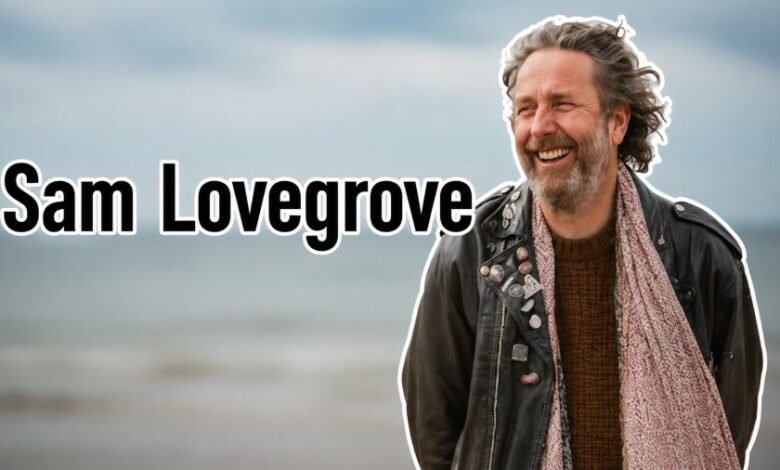
Sam Lovegrove is a British design engineer, motorcycle restorer and television personality. He is best known for working with Henry Cole on Shed & Buried, The Motorbike Show and Find It, Fix It, Drive It.
His television success grew from genuine engineering experience. Long before appearing on screen, he worked with cars, motorsport gearboxes, hydrogen fuel-cell technology and vintage motorcycles.
Like antiques specialist Hettie Jago, he entered television because of his professional knowledge rather than a traditional entertainment career.
Quick Profile
| Detail | Information |
|---|---|
| Full Name | Sam Lovegrove |
| Nationality | British |
| Professional Base | Cornwall, England |
| Profession | Design engineer, motorcycle engineer, fabricator and television personality |
| Education | Studied mechanical engineering at Oxford Brookes University |
| Specialist Area | Vintage British motorcycles |
| Known For | Shed & Buried, The Motorbike Show and Brough Superior restoration |
| Long-Term Collaborator | Henry Cole |
| Notable Skill | Designing, machining and rebuilding rare motorcycle components |
Why Is Sam Lovegrove Famous?
He is famous for combining advanced engineering knowledge with traditional workshop skills.
Viewers recognise him as the calm and technically gifted mechanic who helps Henry Cole repair unusual motorcycles, cars, tractors and other forgotten vehicles.
His knowledge is not limited to basic servicing. He can design components, rebuild engines, cut gears, create frames and manufacture parts that are no longer commercially available.
His work with Brough Superior motorcycles has also earned him respect outside television. The manufacturer describes him as a leading restoration expert with worldwide knowledge of the historic marque.
Early Interest in Motorcycles
His interest in machines began during childhood in Cornwall.
A detailed motorcycle magazine interview reported that he started acquiring motorcycles at about ten years old. By the age of twelve, he was helping in local garages and learning how mechanical systems worked.
His first motorcycle project combined parts from several machines. He used a Suzuki AP50 rolling chassis, fitted a different Honda engine and modified other components himself.
He made the motorcycle road legal at sixteen and rode it for approximately two years.
These early projects helped him develop a practical understanding of engineering. Instead of learning only from books, he gained experience by repairing, adapting and testing real machines.
Education at Oxford Brookes University
Before attending university, he worked as a mechanic and operated a small garage in Cornwall restoring old cars.
He later moved to Oxford and studied mechanical engineering at Oxford Brookes University.
The available profile states that he completed three years of a four-year course before accepting professional engineering work. Therefore, he should be described as having studied mechanical engineering rather than being presented as a confirmed graduate.
University introduced him to traditional British motorcycles. At twenty-one, he bought an Ariel VB600 side-valve motorcycle after seeing it advertised in a magazine.
The Ariel arrived as a collection of parts in boxes. Restoring and riding it strengthened his interest in old British engineering.
Professional Engineering Career
After university, he entered professional engineering rather than immediately becoming a television personality.
His early work included designing motorsport gearboxes. He also gained experience connected with Aston Martin vehicles and specialist paintwork.
He later moved into hydrogen fuel-cell development. This was an advanced area of engineering focused on producing cleaner vehicle power systems.
By 1999, he was leading design work on experimental fuel-cell vehicles. His team developed three trucks and worked on a hydrogen-powered taxi prototype.
The position provided valuable technical experience, but it gradually became more managerial. It also required regular travelling and long periods away from home.
He eventually left the role because he wanted more time with his children and preferred practical engineering work.
Unlike television actors such as Craig Parkinson, he built his public career after years of working directly with machinery and industrial technology.
Building a Workshop Career in Cornwall
Returning to Cornwall allowed him to create a career centred on specialist workshop projects.
He began manufacturing components for old engines and motorcycles. Many of these parts were difficult or impossible to purchase through normal suppliers.
His documented abilities include gear cutting, camshaft production, welding, engine tuning, frame construction and precision machining.
He also uses computer-aided design when necessary. This combination of modern design methods and traditional workshop techniques allows him to solve unusual mechanical problems.
His approach is based on repairing and improving existing machinery rather than replacing everything with new components.
That practical career differs from the more traditional British television path followed by performers such as David Lonsdale.
Brough Superior Restoration Expert
Brough Superior is one of the most respected names in British motorcycle history.
The company’s official profile of Sam Lovegrove describes him as a widely known television personality and a major expert in restoring its motorcycles.
He is also a collector of Brough Superior machines.
His reputation comes from understanding both the visible design and the internal engineering of these motorcycles. Restoring one can require the recreation of rare components, careful engine work and detailed historical knowledge.
His projects have helped preserve important examples of British motorcycle heritage.
Bonneville Speed Record Projects
He worked as a technical specialist during Brough Superior’s 2011 visit to the Bonneville Salt Flats in Utah.
The team returned in 2013 with two motorcycles and several riders. Lovegrove and Alastair Gibson served as the chief engineers.
One of the main machines was the 750cc Baby Pendine Brough Superior.
Lovegrove rebuilt and tuned its JAP V-twin engine. He also constructed the rolling chassis from bare tubing and completed its paintwork.
Henry Cole rode the motorcycle to a recorded flying-kilometre speed of 104.298 mph during the 2013 event.
The wider Brough Superior team achieved several recognised results during the programme. The project demonstrated that Lovegrove’s abilities extended far beyond television repairs.
Partnership with Henry Cole
The Brough Superior work helped create his long professional relationship with Henry Cole.
Cole later asked him to prepare a Triumph motorcycle for another speed project. Lovegrove modified its engine, valves, compression and other internal parts to improve performance.
Their different personalities worked well on television.
Cole usually leads the conversation, searches for vehicles and takes on the driving challenges. Lovegrove studies the machinery and determines whether it can be repaired safely and practically.
This balance became an important part of their programmes.
The Motorbike Show
Lovegrove became a regular restoration expert on The Motorbike Show.
The programme follows Henry Cole as he rides motorcycles, studies famous manufacturers and restores classic machines.
Lovegrove works behind the scenes and on camera during the restoration projects. He has appeared alongside other respected engineers, including Allen Millyard.
His role involves much more than following instructions. He examines damaged components, identifies engineering problems and helps create workable solutions.
His straightforward explanations allow viewers to understand complicated mechanical work without unnecessary technical language.
Shed & Buried
Shed & Buried introduced Lovegrove to a much wider television audience.
The programme follows him and Henry Cole as they visit sheds, farms, workshops and private collections across Britain.
They search for neglected motorcycles, cars, tractors, military machines and automotive memorabilia. The aim is to buy promising objects, repair them and later sell them.
Lovegrove provides the technical judgment behind many purchasing decisions.
He examines engines, frames and missing parts before deciding whether a machine can be restored within a sensible budget.
His quiet personality became an important part of the programme. Instead of creating drama, he focuses on the mechanical problem in front of him.
This authentic on-screen style reflects the trust audiences also place in experienced British broadcasters such as Jo Blythe.
Find It, Fix It, Drive It
Lovegrove also co-presented Find It, Fix It, Drive It with Henry Cole.
The ten-episode series used a larger challenge-based format. The pair first had to find a suitable vehicle and then prepare it for a demanding event.
Projects included vintage tractors, unusual motorcycles and a pre-war racing car.
Lovegrove used his design and fabrication knowledge to make the old vehicles usable again. Other specialist engineers were sometimes invited when a project required additional expertise.
The programme showed how careful restoration can return forgotten machinery to active use.
Junk & Disorderly
He has also appeared in Junk & Disorderly with Henry Cole, Allen Millyard and Guy “Skid” Willison.
The team searches auctions, autojumbles, farms and sheds for items that can be purchased and improved.
The programme includes motorcycles, tools, signs, workshop objects and unusual pieces of motoring history.
A retrospective featuring Lovegrove and the wider team was broadcast in 2025.
Brough Superior Museum Fire Restorations
Some viewers questioned why he was absent from certain later television episodes.
Henry Cole’s official website explained that Lovegrove was working on two historically important Brough Superior motorcycles.
The machines had been severely damaged during the 2021 fire at the Top Mountain Crosspoint Motorcycle Museum in Austria.
Restoring fire-damaged historic motorcycles is a major technical challenge. Heat can distort metal, weaken materials and destroy parts that are difficult to replace.
The work showed that his specialist restoration career continued even when he was not regularly visible on television.
Shed Talk
In 2025, he became the first featured guest in Henry Cole’s online interview series Shed Talk.
The programme allowed him to discuss his life, engineering interests and motorcycle collection in greater depth.
A second episode focused on his vintage machines and included a motorcycle ride with Cole.
These appearances helped answer speculation about his television absence while giving viewers a closer look at his work.
Dom Chinea’s Cornish Workshop
His latest confirmed television work includes Dom Chinea’s Cornish Workshop.
According to UKTV’s official announcement, he joined Dom Chinea to provide general engineering assistance.
The programme follows Chinea as he converts an agricultural barn in Cornwall into a working workshop.
Lovegrove assists with mechanical and community projects, including vehicles and locally important equipment.
His involvement fits naturally with his Cornwall background and long workshop career.
His journey from industry specialist to television personality also reflects how real professional experience can create a strong public connection, as seen in stories such as Jodie Ounsley.
Engineering Style and Work Ethic
Lovegrove is known for approaching machinery logically.
He first studies how a component was designed and why it failed. He can then decide whether it should be repaired, modified or recreated.
He enjoys projects that require original thinking. Difficult engineering problems often provide greater satisfaction because the solution cannot simply be purchased.
His work also shows patience. The Baby Pendine project reportedly required around fourteen months of detailed construction and preparation.
Television presents only part of the process. Much of his work involves measuring, machining, testing and correcting small problems away from the camera.
Motorcycle Collection and Personal Interests
His documented collection has included several Ariel and Brough Superior motorcycles.
Machines connected with him include an Ariel VB600, a 1928 Ariel Model B, an Ariel NH 350 and a 1933 Brough Superior 11.50.
He prefers motorcycles with visible history and mechanical character.
His interests also include period-style hill climbs, speed events and building machines that reflect authentic early motorcycle engineering.
These interests support his public image as an engineer who values function, history and craftsmanship more than modern luxury.
Current Status
As of June 2026, Lovegrove remains active as an engineer, motorcycle restorer and television contributor.
His recent public work includes Shed Talk, the Junk & Disorderly retrospective and Dom Chinea’s Cornish Workshop.
He also remains closely associated with historic British motorcycles and demanding Brough Superior restoration projects.
His career continues to connect advanced design knowledge with traditional manual engineering.
Interesting Facts
- He began working around motorcycles and garages during childhood.
- He made his first modified motorcycle road legal at sixteen.
- He studied mechanical engineering at Oxford Brookes University.
- His industrial career included motorsport and hydrogen fuel-cell projects.
- He became head of design during his fuel-cell engineering work.
- He helped engineer Brough Superior motorcycles for Bonneville speed attempts.
- He manufactures rare components for historic engines.
- He is based professionally in Cornwall.
- His television partnership with Henry Cole developed through motorcycle engineering.
- He collects and restores vintage British motorcycles.
Conclusion
Sam Lovegrove built his public reputation through real engineering ability.
His journey began with childhood motorcycle projects and continued through university study, motorsport design, fuel-cell development and specialist restoration work.
Television later introduced his skills to a much larger audience.
Through Shed & Buried, The Motorbike Show and other programmes, viewers have watched him return damaged and forgotten machines to working condition.
His career demonstrates the value of patience, technical knowledge and traditional craftsmanship.
Frequently Asked Questions
Who is Sam Lovegrove?
He is a British design engineer, classic motorcycle restorer and television personality.
What is Sam Lovegrove famous for?
He is best known for appearing with Henry Cole on Shed & Buried and The Motorbike Show.
What is his nationality?
He is British and is professionally based in Cornwall, England.
What did he study?
He studied mechanical engineering at Oxford Brookes University.
Is he a real engineer?
Yes. His career includes motorsport gearbox design, vehicle engineering, hydrogen fuel-cell development and specialist motorcycle restoration.
Which motorcycles does he specialise in?
He is particularly respected for restoring Brough Superior and Ariel motorcycles.
Did he work on a speed-record motorcycle?
Yes. He was a chief engineer during Brough Superior’s successful 2013 Bonneville programme.
What is his latest television programme?
His latest confirmed work includes Dom Chinea’s Cornish Workshop.